07 · case study · senior product designer and UX researcher
Medable translation management: clinical-trial translation prep cut from 72 to 17 hours per language
Clinical trial managers were cleaning spreadsheets by hand before every translation, and each language took days. I led the research and the redesign of the Translation Manager, working daily with the product manager and the tech lead.
- role
- Senior product designer and embedded UX researcher, Medable
- dates
- 2022 to 2023
- worked with
- The product manager and tech lead, daily, from day one
- in scope
- FDA/GxP, GDPR, WCAG, ADA and Section 508 requirements
- 72 → 17hours of translation prep per language, in the first 30 days of the pilot
- 67% → 97%FDA submission readiness
- 38 → 6customer success tickets a week
- 30+languages supported by the workflow
01 · business need
The business need
Medable runs decentralized clinical trials. Patients use an app for tasks, assessments, emails and notifications, and all of that content has to be translated for every country a study runs in. Every new language was slow and manual, and it stalled teams and delayed review-board submissions.
In clinical trials a delay can derail a study. Medable needed a translation workflow that scales to more than 30 languages without adding people, and that stands up to regulators.
- 60–72 ha trial manager spent cleaning and colour-coding spreadsheets for one export
- 5–7 daysof extra cleanup when vendor files came back with a different structure
- 25+ ha week lost by each trial manager to manual clean-up
02 · customer needs
What was happening
Clinical trial managers raised a Jira ticket for every translation export. The export came back as a flat spreadsheet, often with formatting errors. They cleaned it by hand and split each language into its own tab. When vendors returned the files, the structure often no longer matched, and the cleanup started again.
a clinical trial manager
It took longer to prepare and reformat the data than to do the actual translation.
customer success
Caught in the middle: vague requests, translation questions and chasing timelines.
study sponsors
Demanded fast turnarounds, and a change in the middle of a study reset the whole process.
The root cause was the format. The spreadsheet had no structure: nothing grouped tasks, assessments or strings by study phase. A structured format could automate about 80% of the work, but the product did not support one yet.
03 · how the work ran
Continuous discovery, from the first interview to the rollout
This is a compliance-critical domain, so the work was research-heavy. I used a continuous discovery practice, inspired by Teresa Torres, and kept every insight linked to the design it led to, so the research could be audited.
- Frame the problemScattered stakeholder feedback became one problem statement about data structure, workflow and visibility.
- Deep discovery12 one-hour interviews, and three live translation exports shadowed over Zoom.
- Continuous discoveryA research session every two weeks, with separate tracks for trial managers and customer success, and a living opportunity solution tree.
- StrategyPersonas, journey maps and five experience pillars, tied to measurable goals.
- IdeationA remote design sprint with Product and Engineering on eight "how might we" questions, mapped into four solution tracks.
- Prototype and testLow, then mid, then high fidelity in the Nucleus design system, tested each round.
- ValidateUnmoderated tests in Maze and an A/B test against the old process, then a go decision from the VP of Clinical Product.
- Roll outA phased release behind feature flags, so running studies were not interrupted.
- Change managementA training playbook and two workshops for customer success.
- the opportunity
- Streamline the whole translation lifecycle, from intake and certification to delivery, without losing accuracy, traceability or regulatory readiness.
- goal 1
- Reduce translation prep time to under 24 hours.
- goal 2
- Eliminate the repeat clean-up cycles.
- goal 3
- Every export in the structured format, with full compliance.
04 · research
The research, in 15 artifacts
I presented these to Product, Engineering, Customer Success and senior management. Responses were transcribed and coded, which surfaced six core insights. Each one opens full size.
- 12one-hour interviews: 6 clinical trial managers and 6 customer success staff
- 3live translation exports observed
- 6core insights
- 5experience pillars: efficiency, simplicity, empowerment, communication, user-centricity
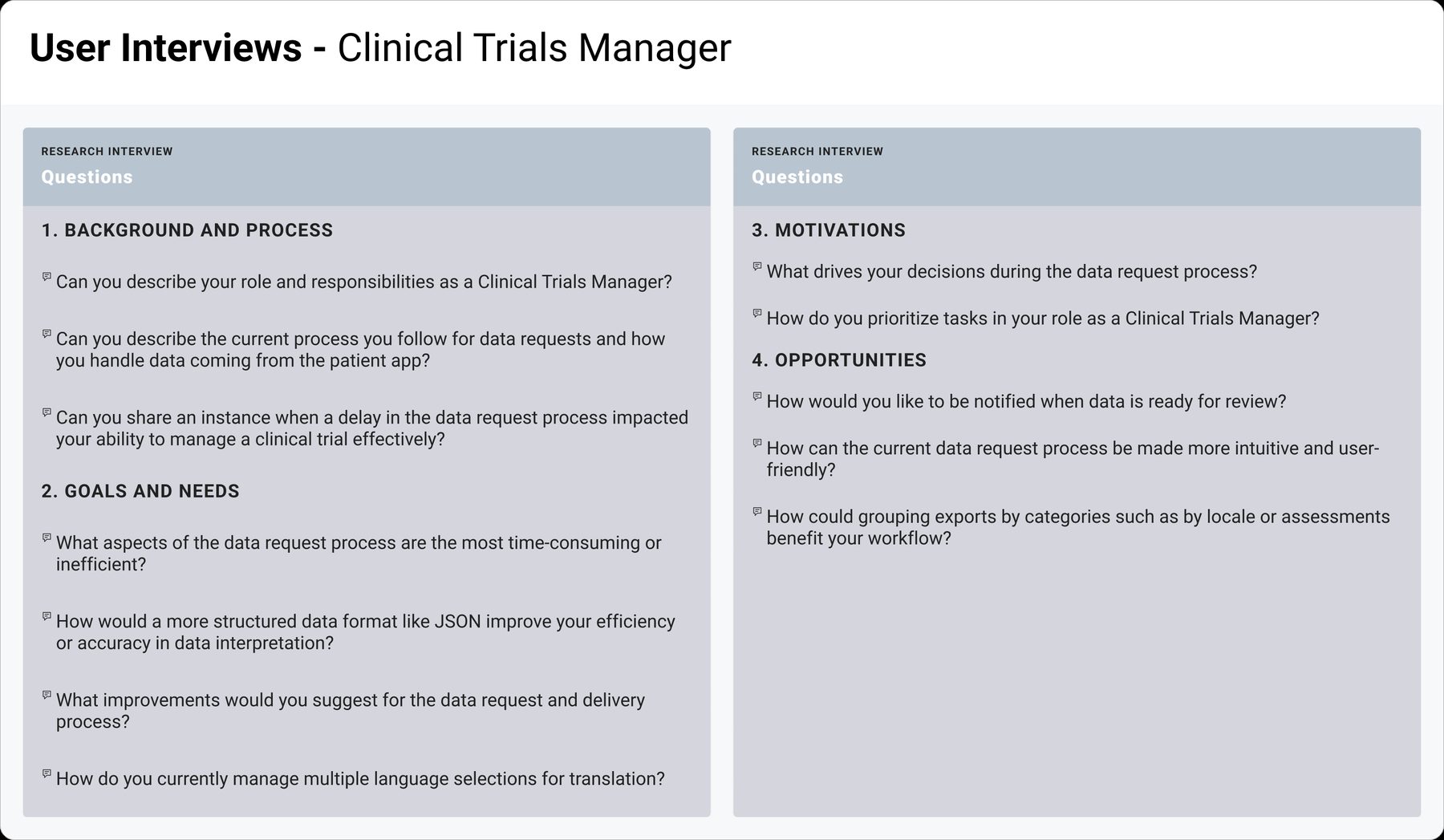 Interview questions: trial managers
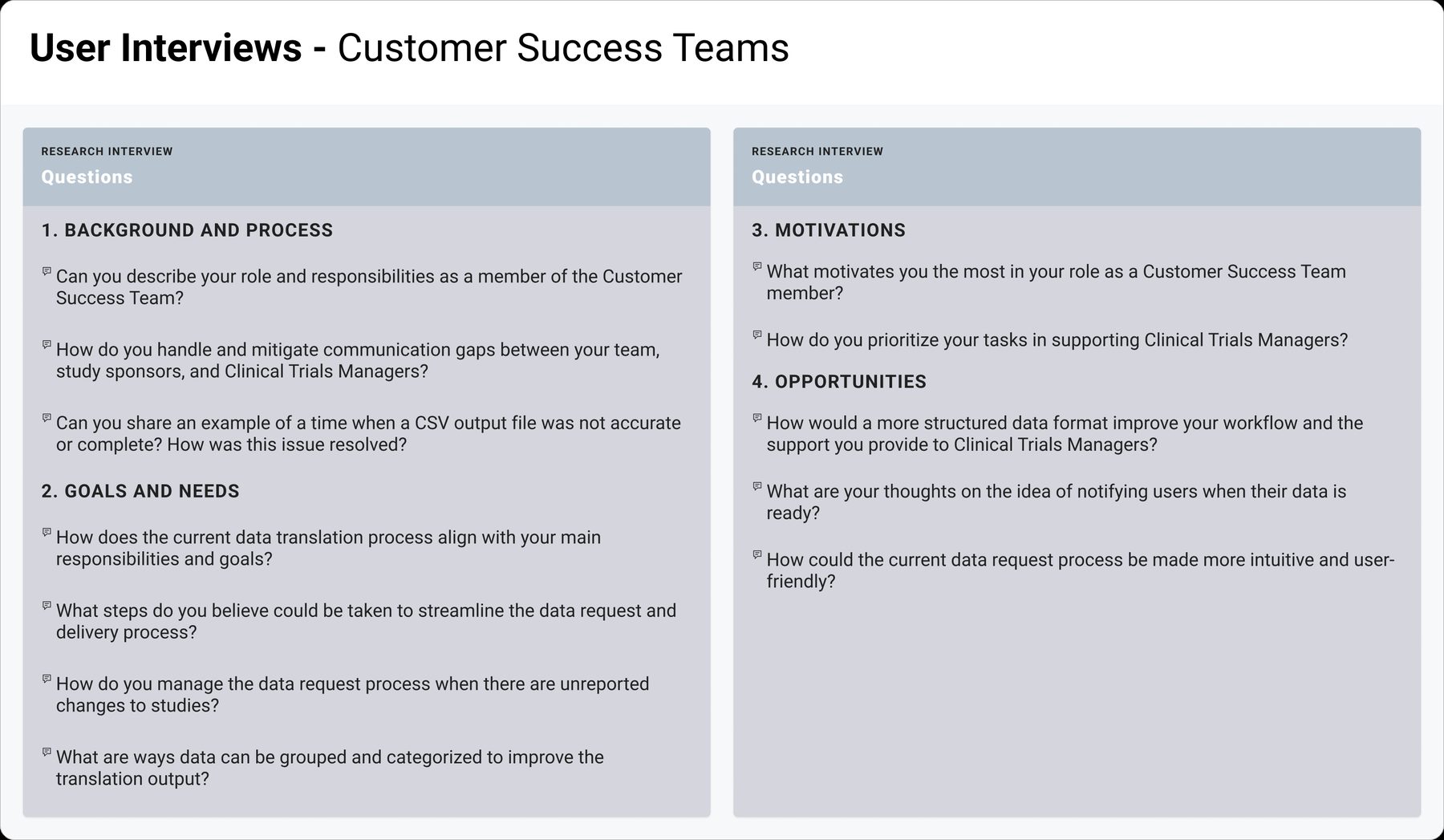 Interview questions: customer success
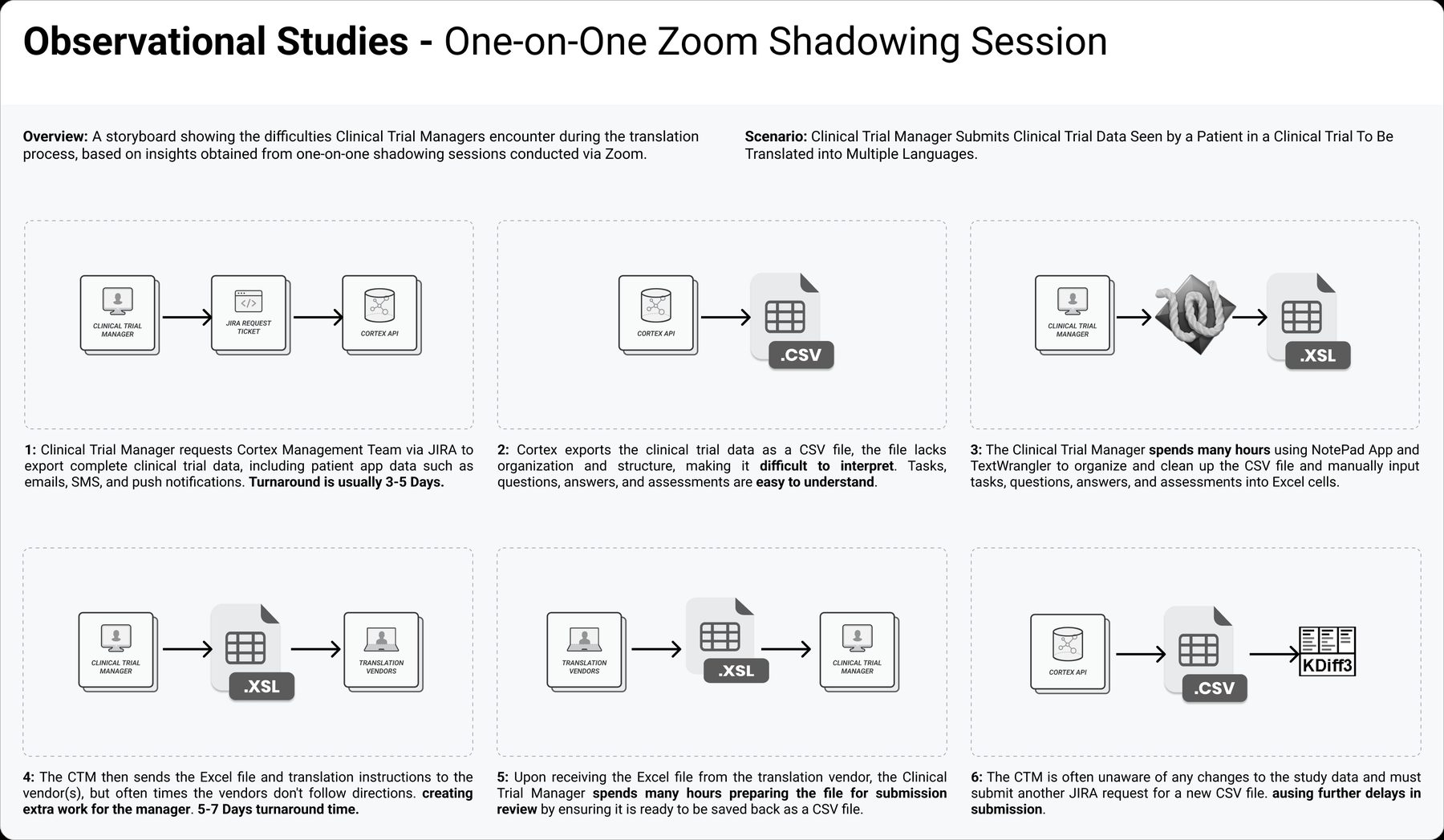 Observational studies
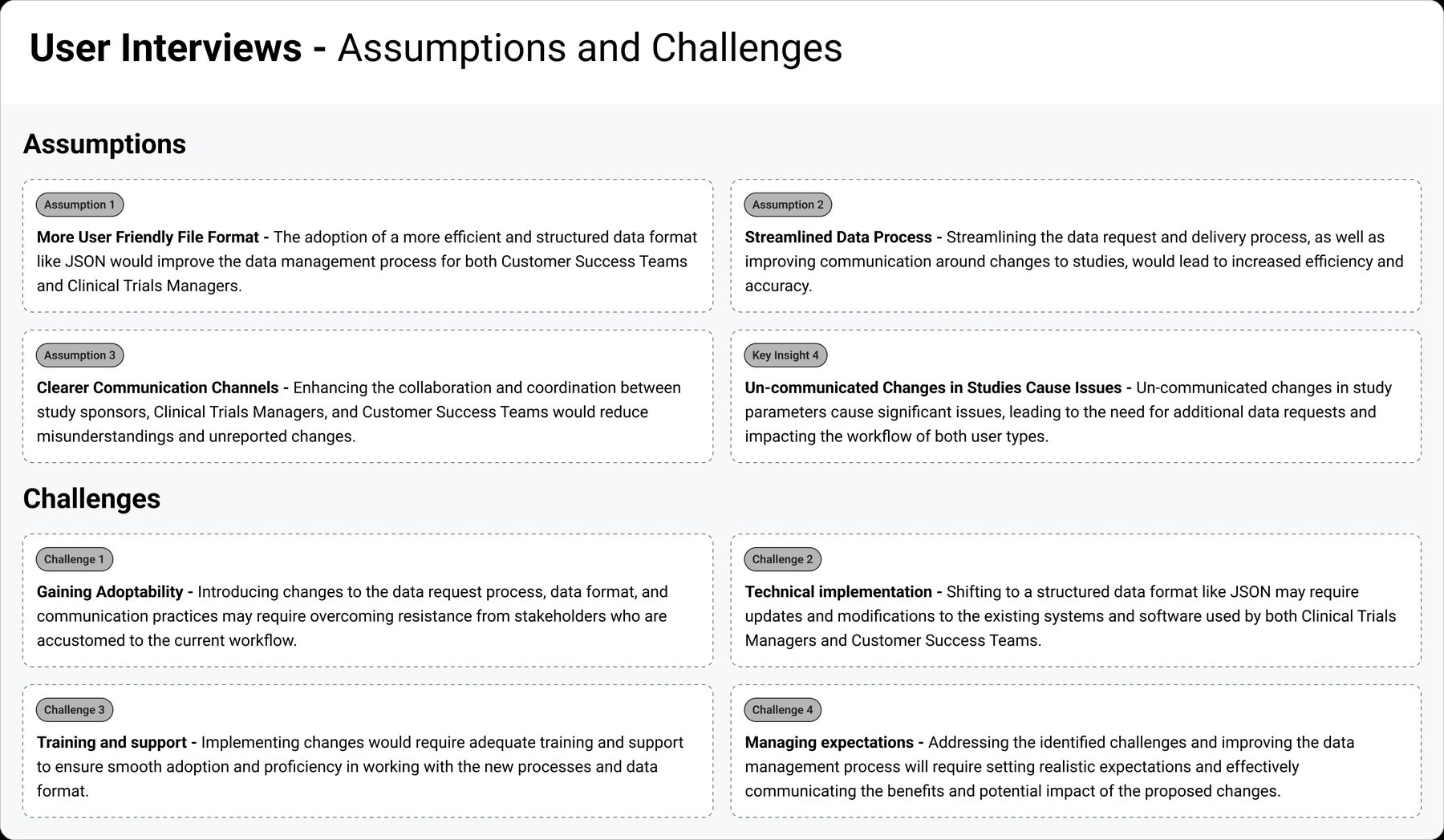 Assumptions and challenges
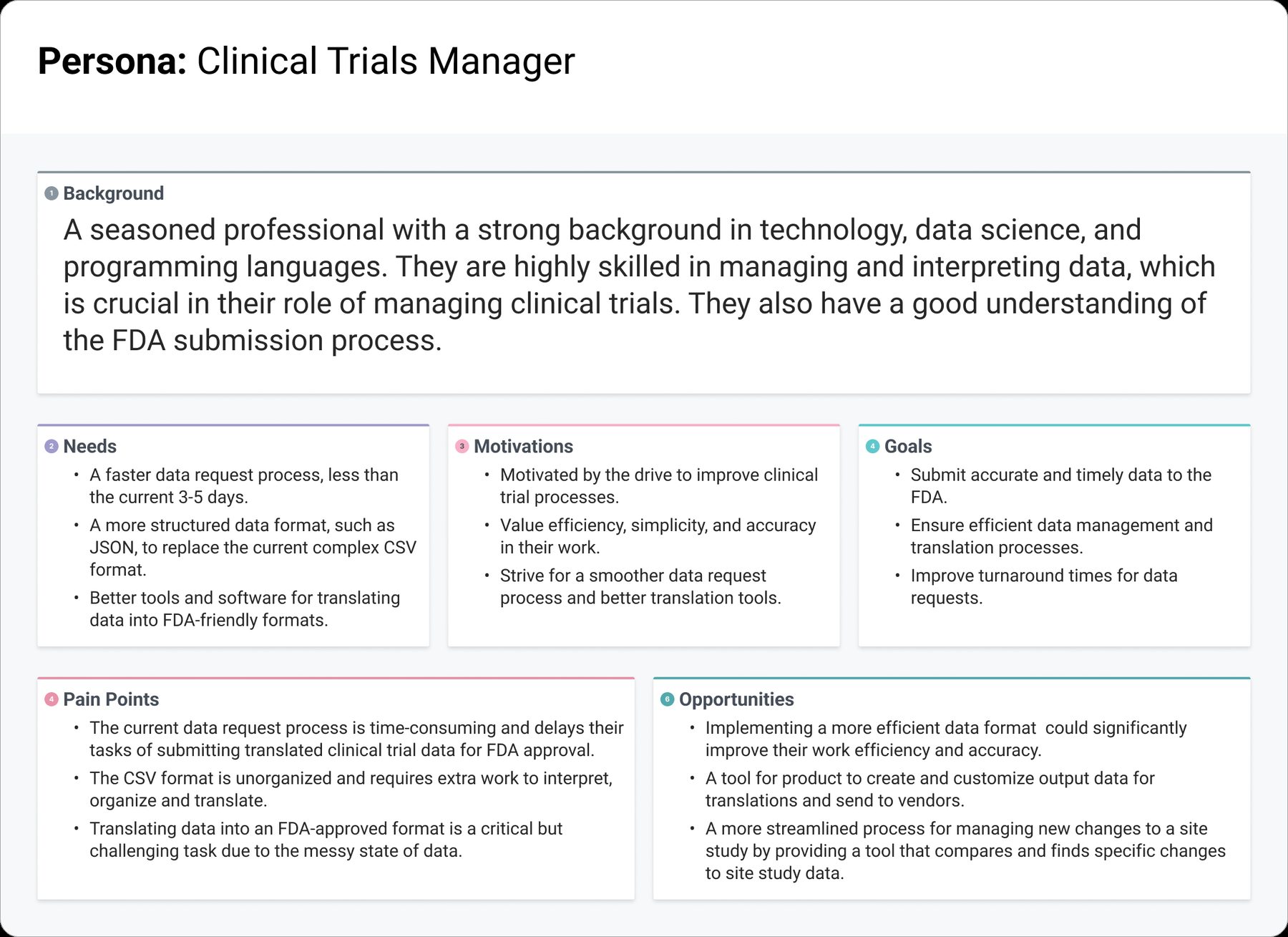 Persona: clinical trials manager
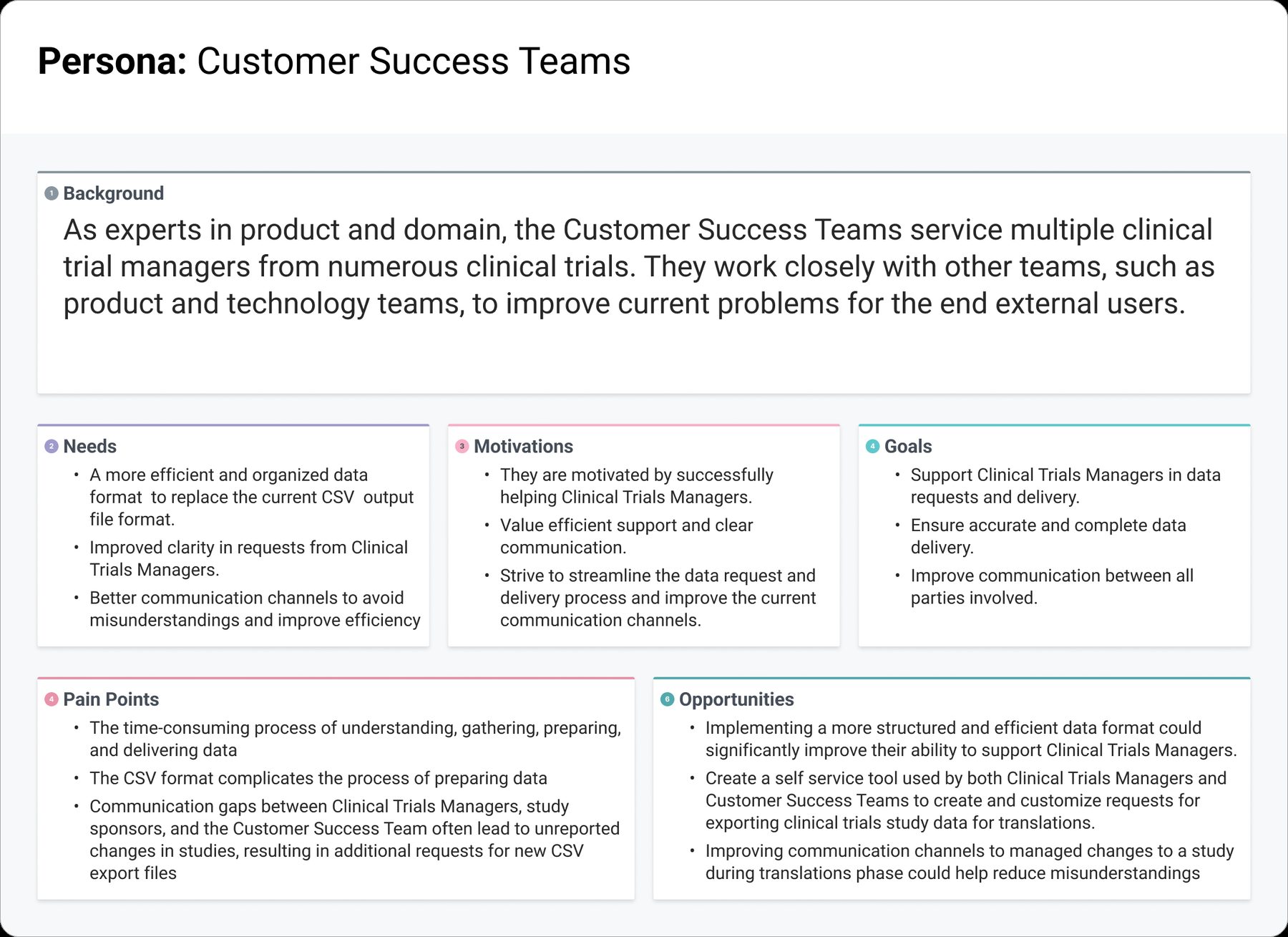 Persona: customer success
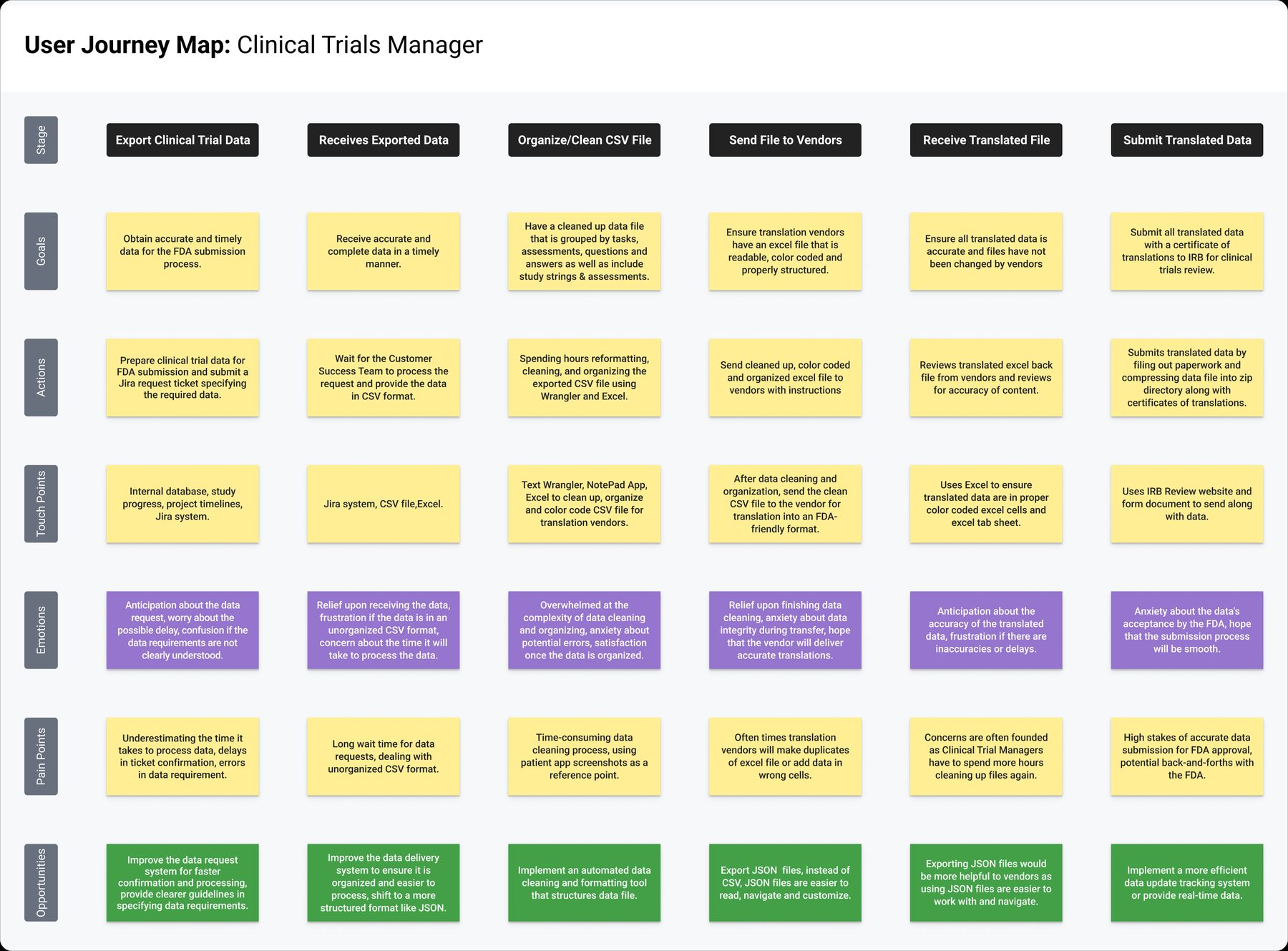 Journey map: trial manager
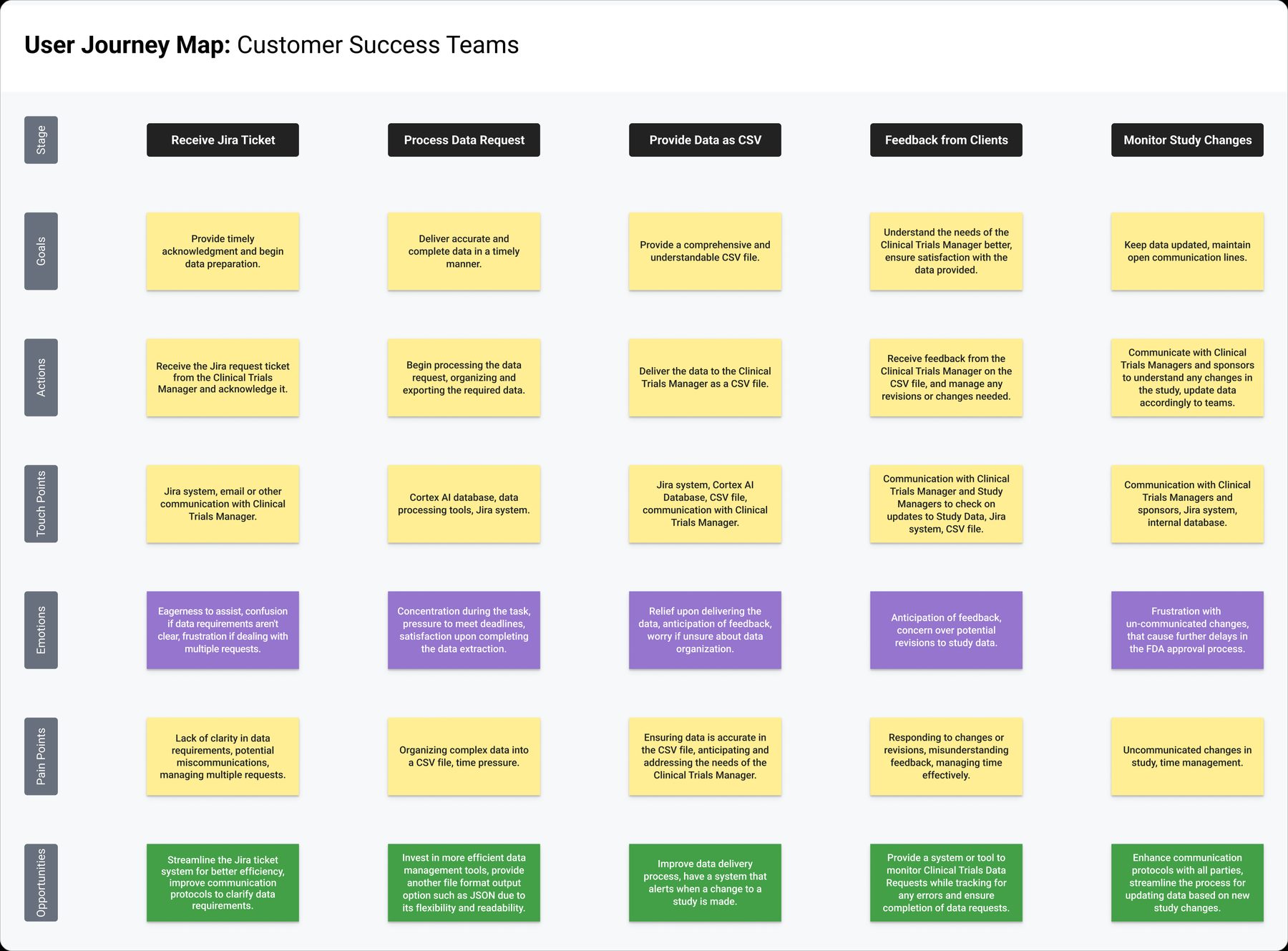 Journey map: customer success
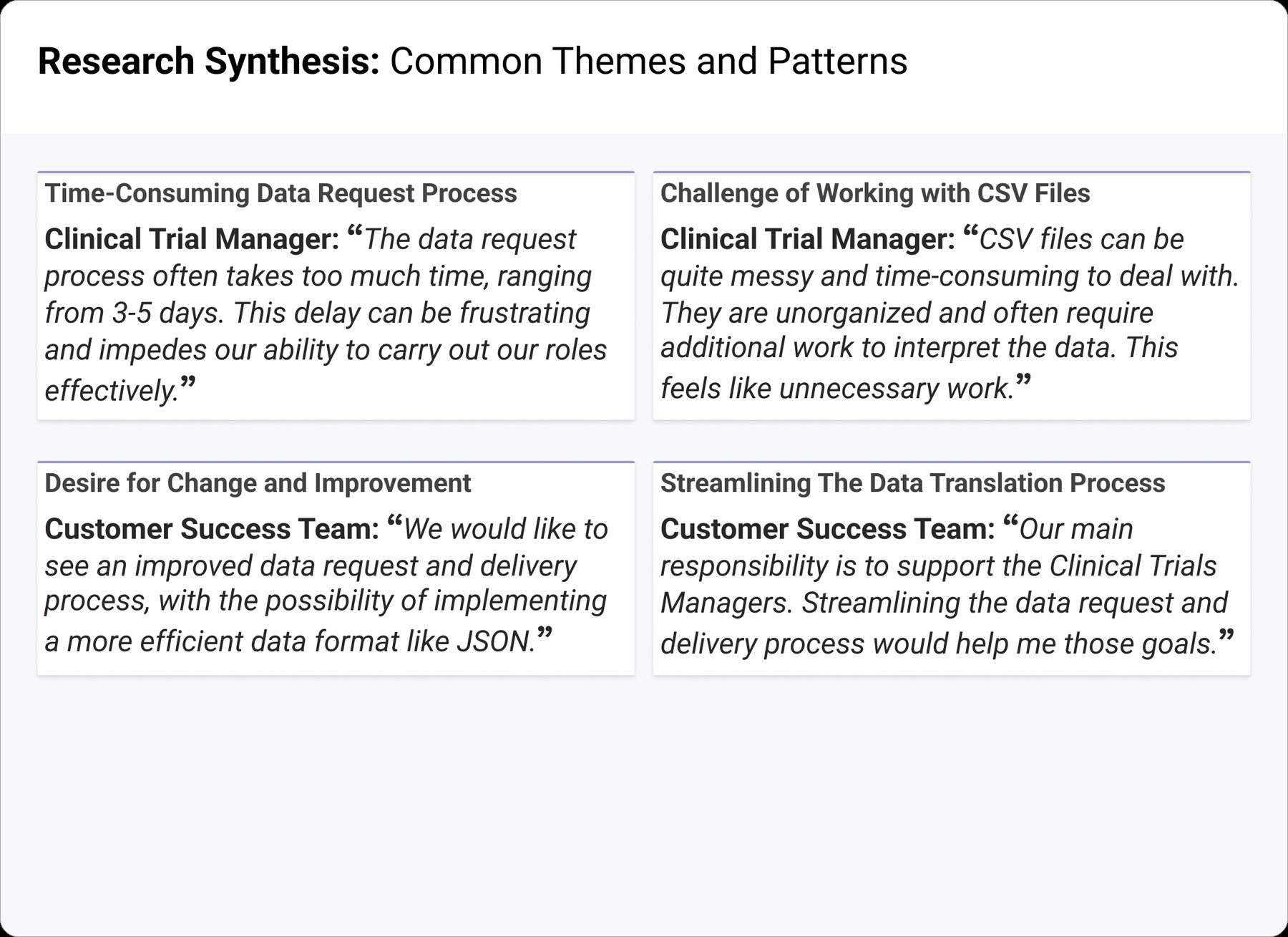 Research synthesis
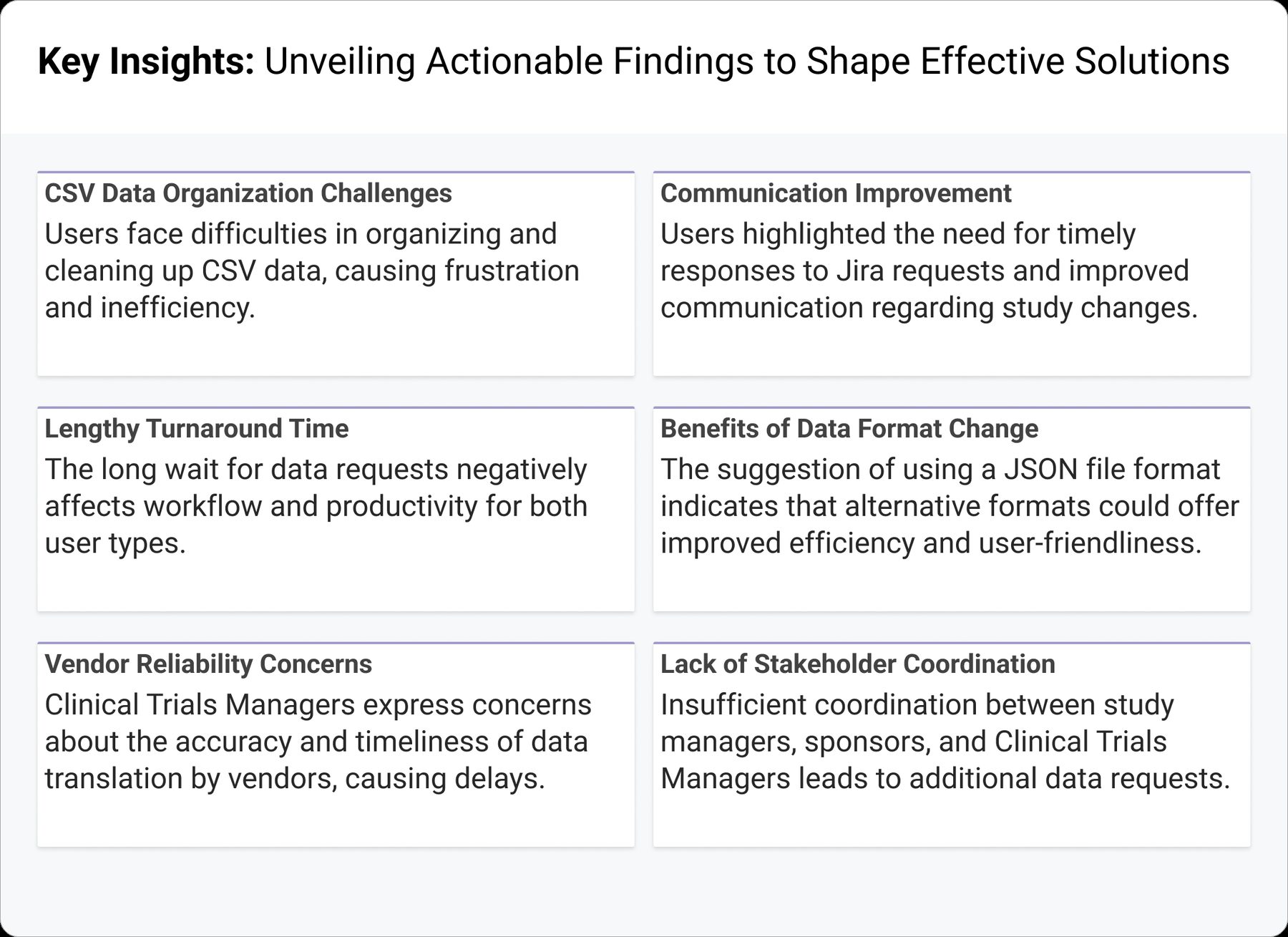 Key insights
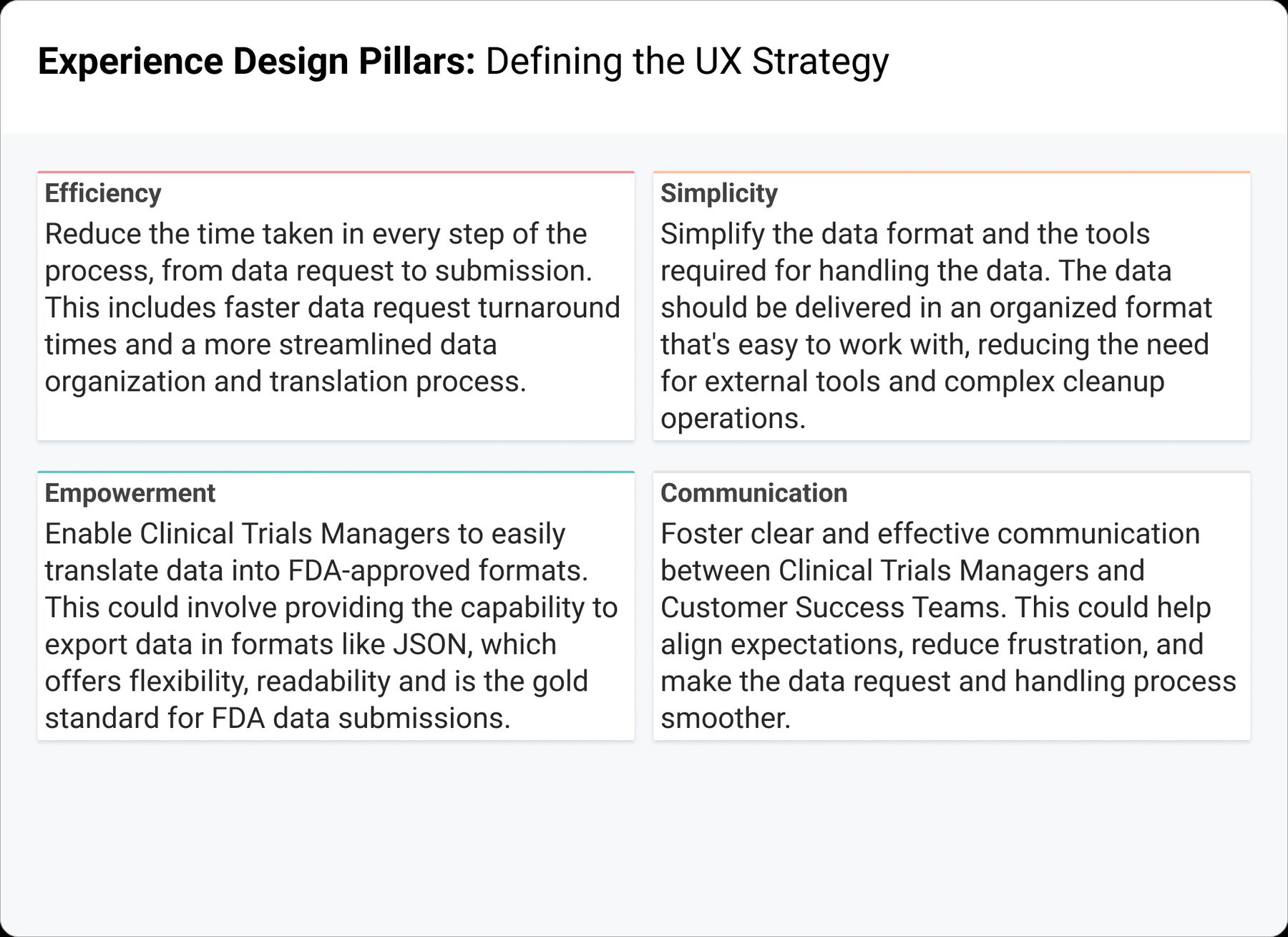 Five experience pillars
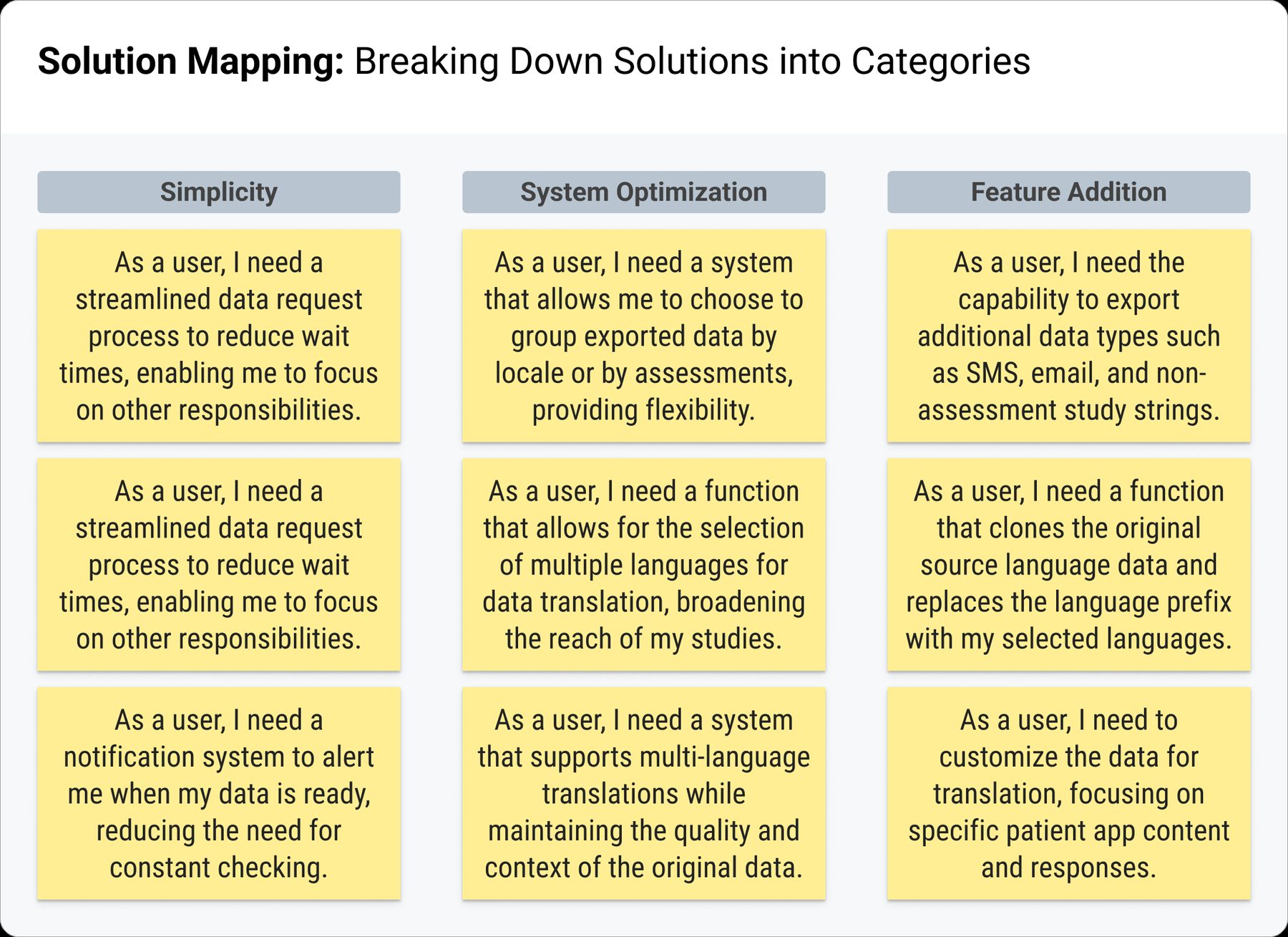 Solution mapping
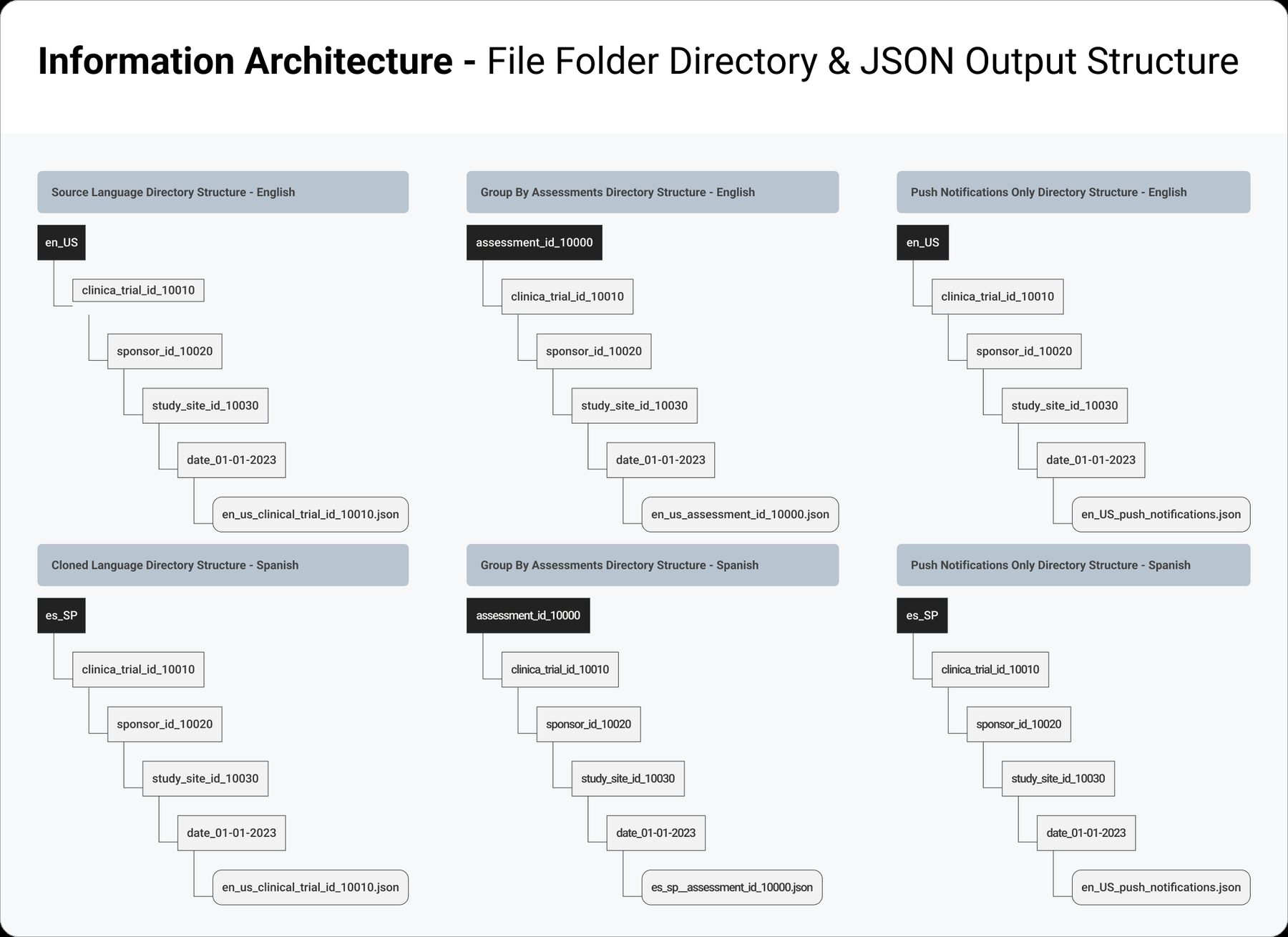 Information architecture
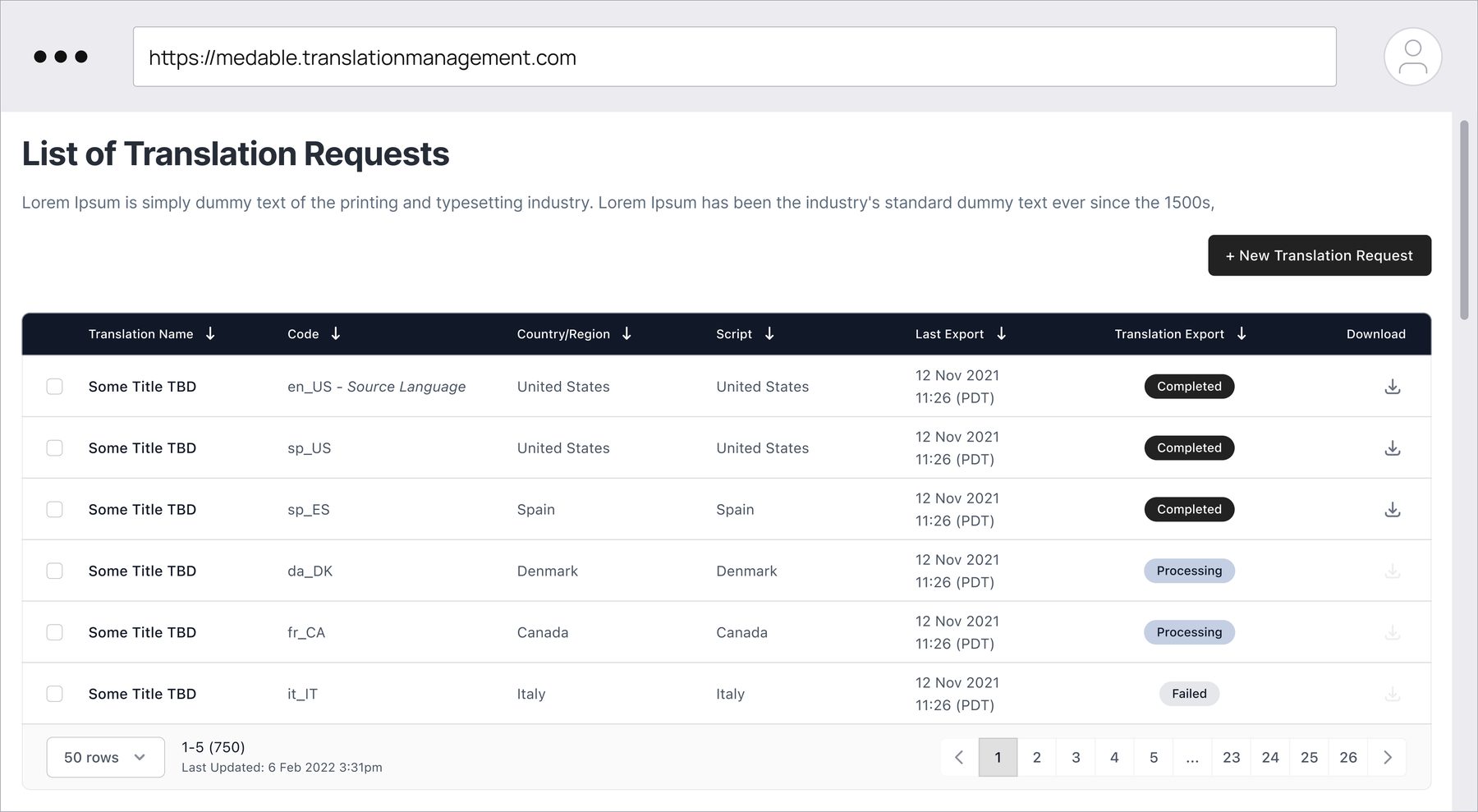 Low fidelity: data table
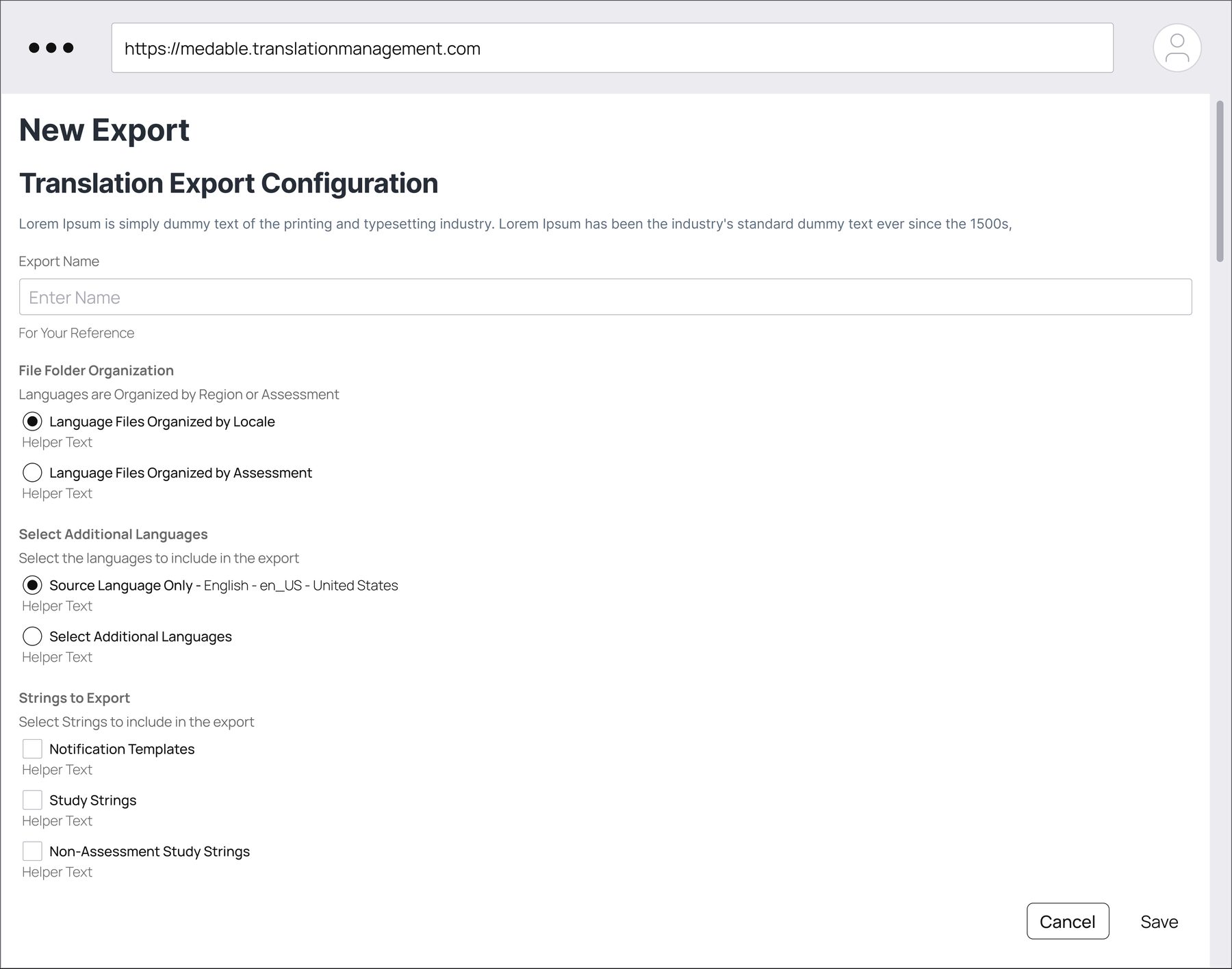 Low fidelity: export form
05 · decision 1 of 3
Fix the format, not the cleanup
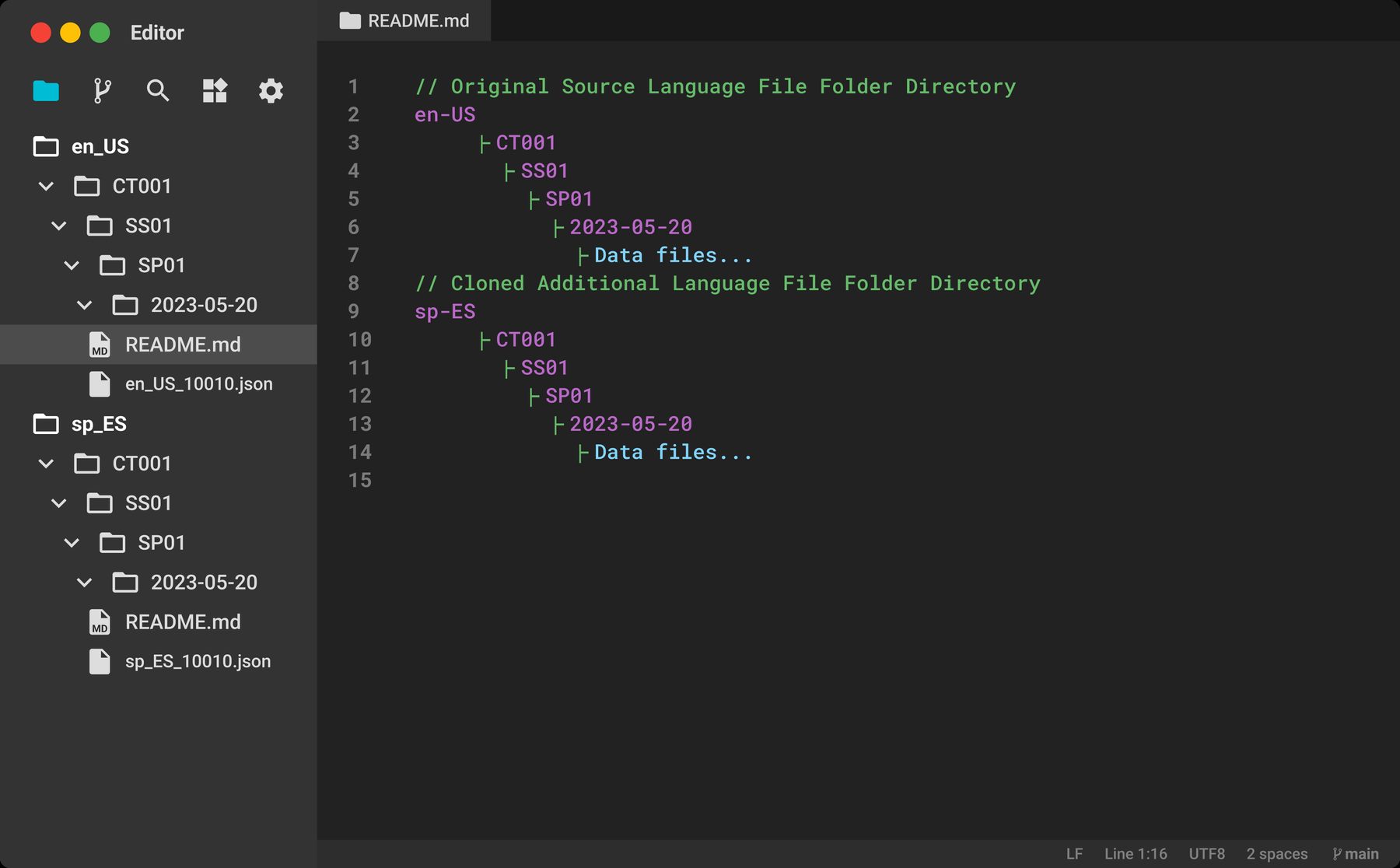
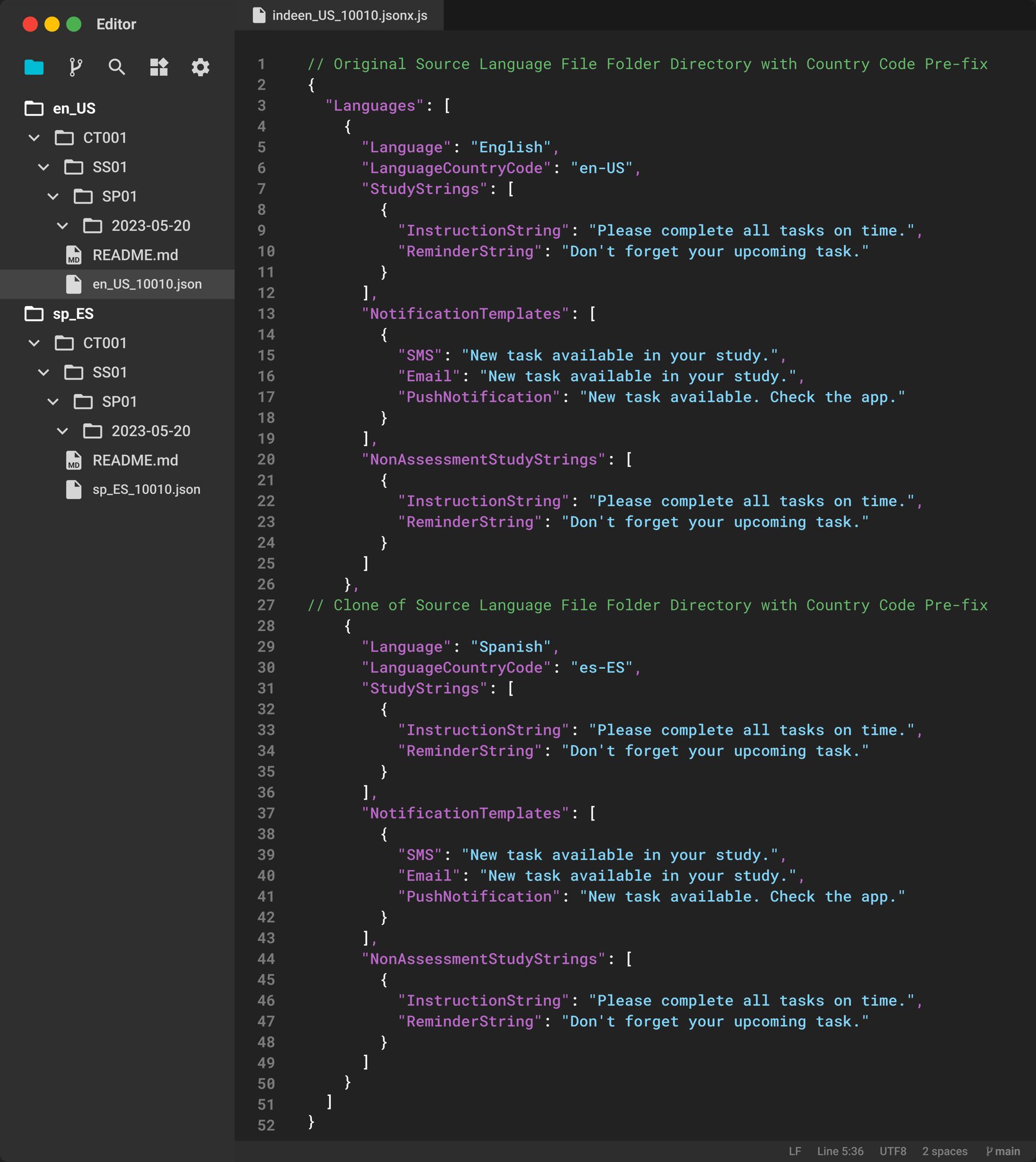
A faster way to clean spreadsheets would have kept the real problem. I designed the export around structured files instead, grouped by assessment and by study strings, so the hierarchy survives the trip to the vendor and back. I defined the file structure and the information architecture together with the tech lead.
Managers now build an export themselves: choose the assessments, the strings and the languages, and request the package, with no ticket.
05 · decision 2 of 3
Design it with the tech lead, not after
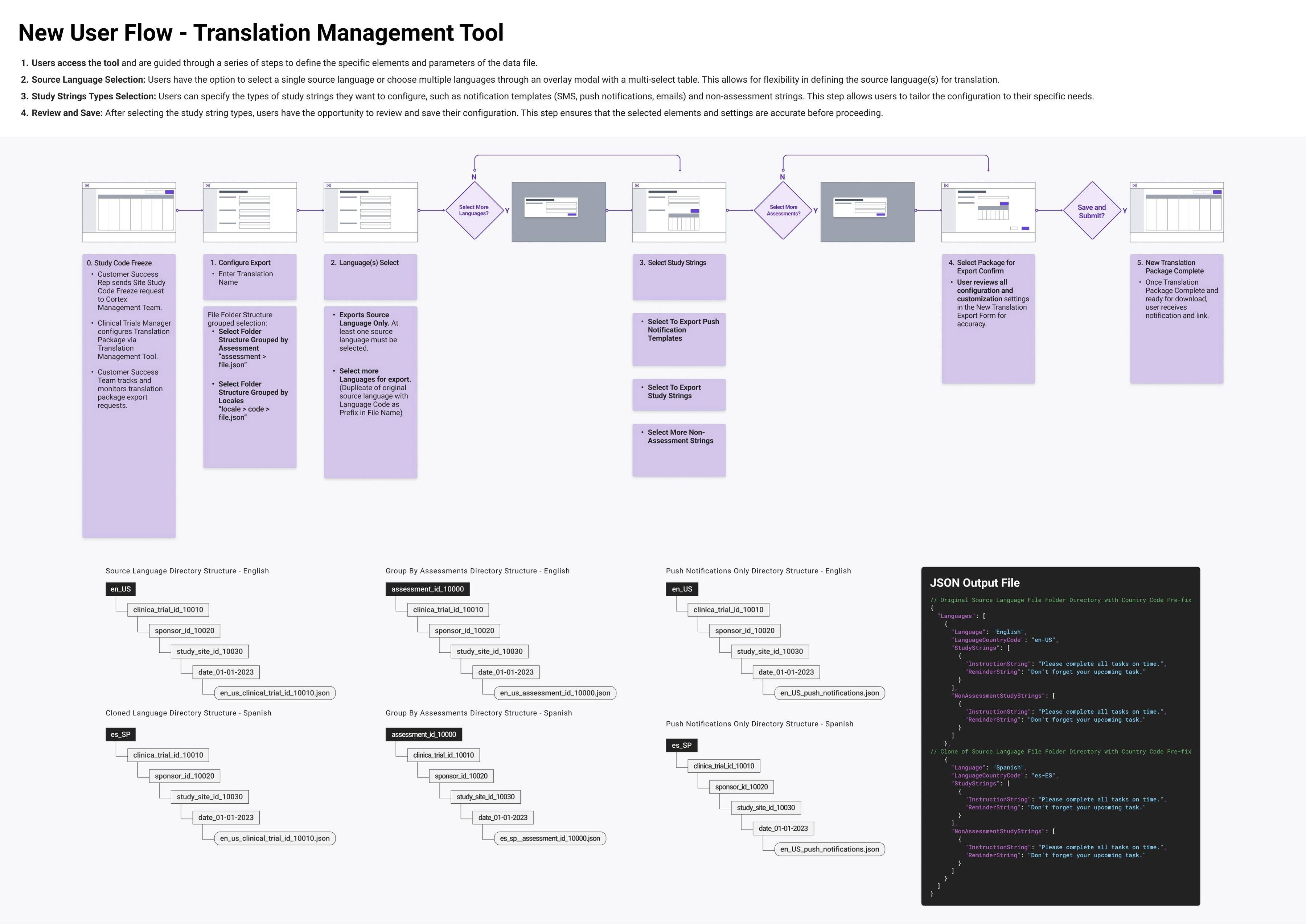
The interface and the data structure are the same decision here. Writing the output schema together saved weeks of rework, and it meant the design intent reached the code. The prototype included a live preview that validates the files, and quality checkpoints for compliance.
The flow and the data, side by side
Three diagrams: the flow a manager follows now, the workflow it replaced, and the schema behind the export. Each one opens in an overlay.
05 · decision 3 of 3
Introduce the change carefully
People had built habits around the old process, and studies were running. I wrote a training playbook, ran two workshops for customer success, and worked with Engineering on a phased release behind feature flags.
06 · testing
Tested every round, before building
Each iteration was tested with five clinical trial managers and three customer success stakeholders. A weekly session tested assumptions with low-fidelity prototypes.
- 68%better time on task than the old workflow, in Maze
- 4xfaster vendor handoffs in an A/B test against the old process
- 5 + 3trial managers and customer success stakeholders in each round
07 · shipped
What shipped
The Translation Manager went to a pilot first, built in the Nucleus design system. A manager requests a complete translation package without a ticket and without cleaning a spreadsheet. Every screen opens larger.
Building an export
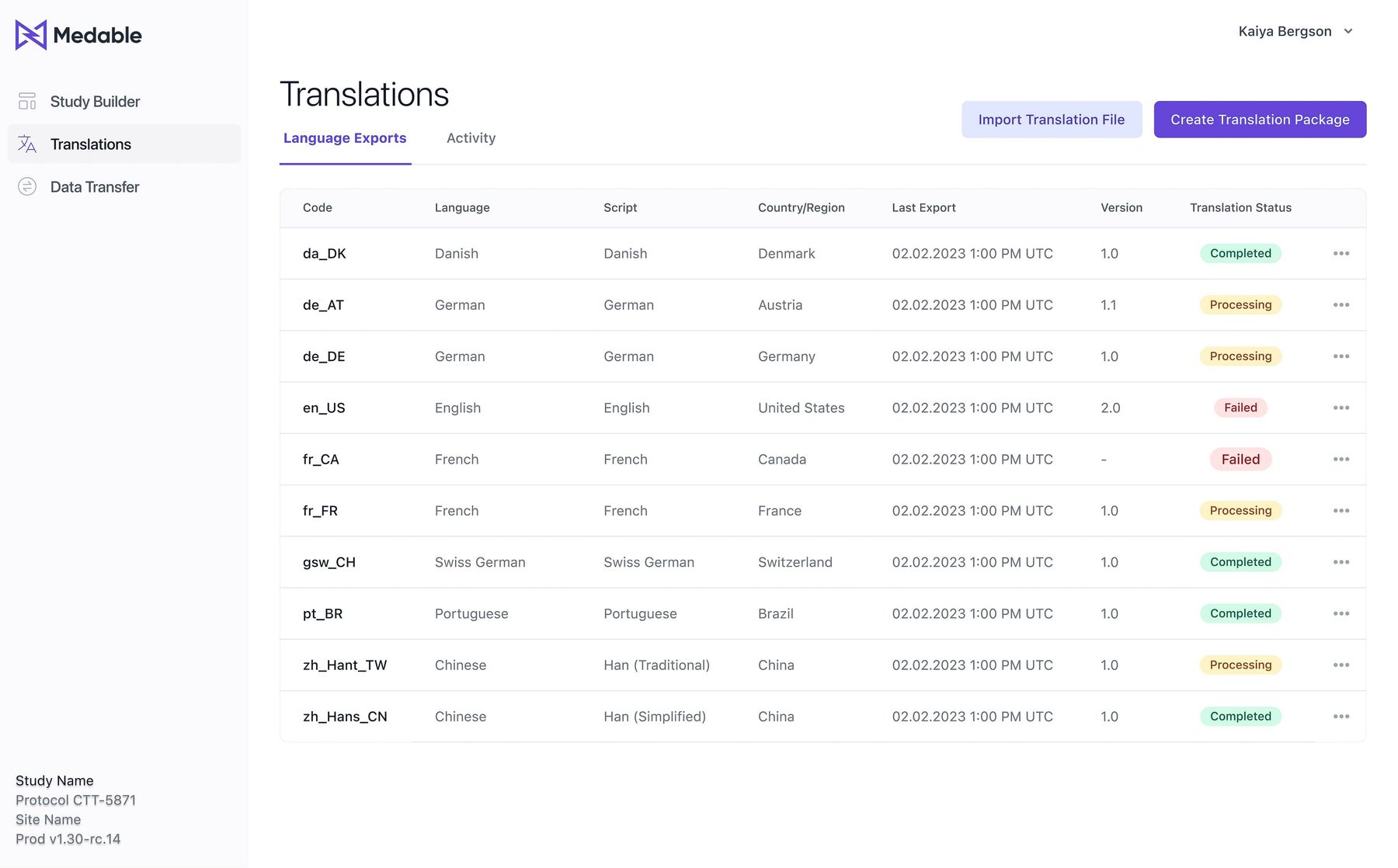 Translations list
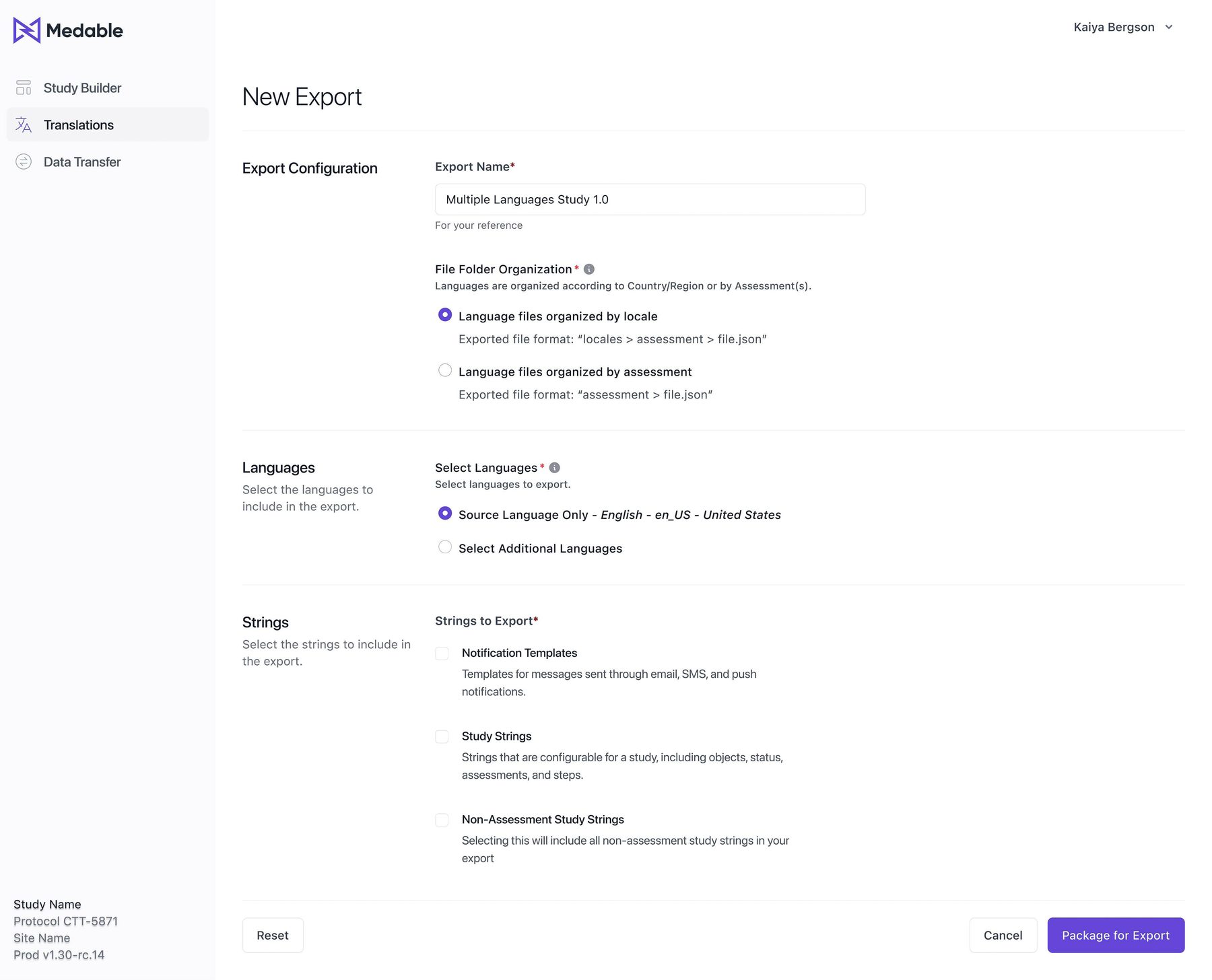 New export
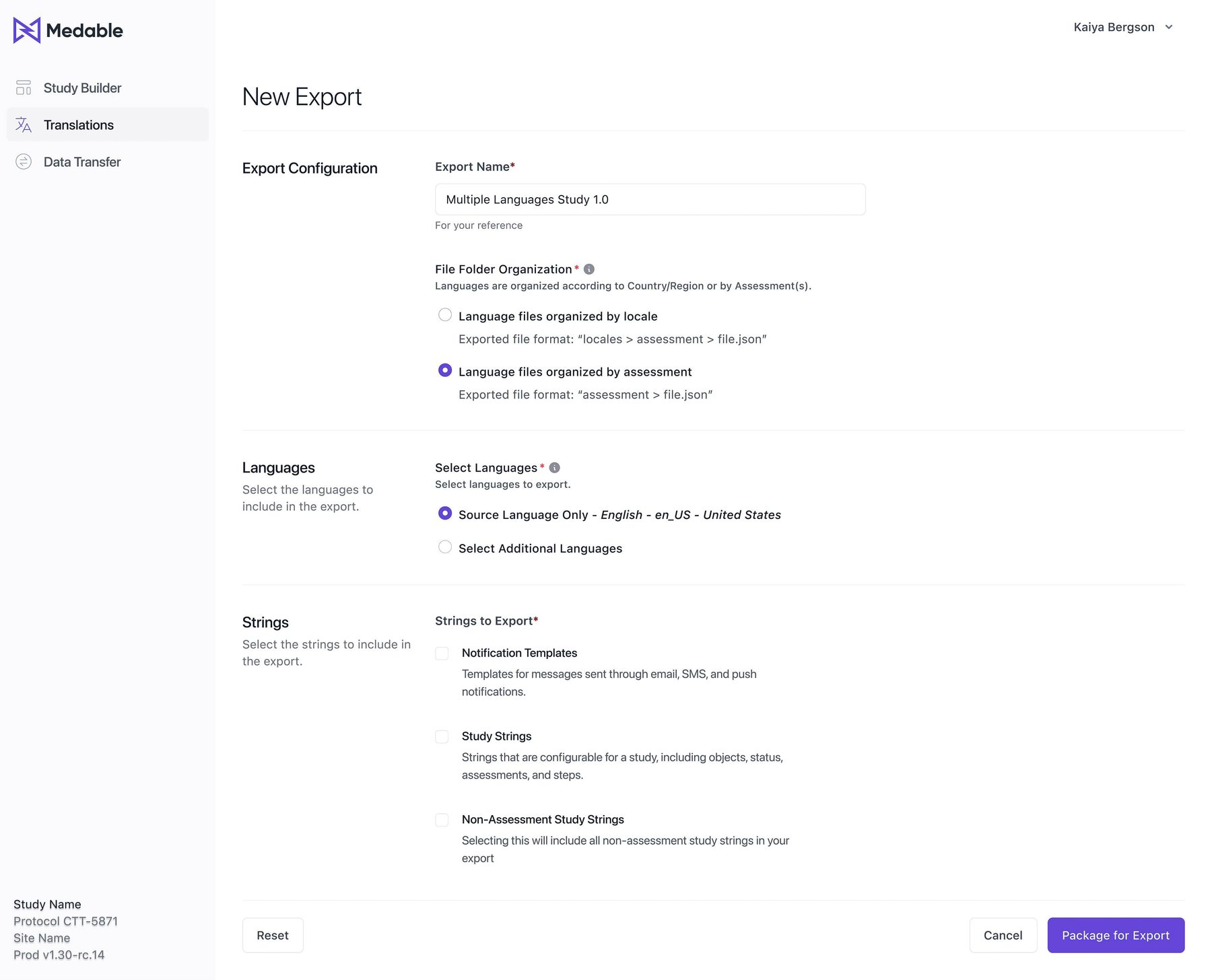 Export by assessment
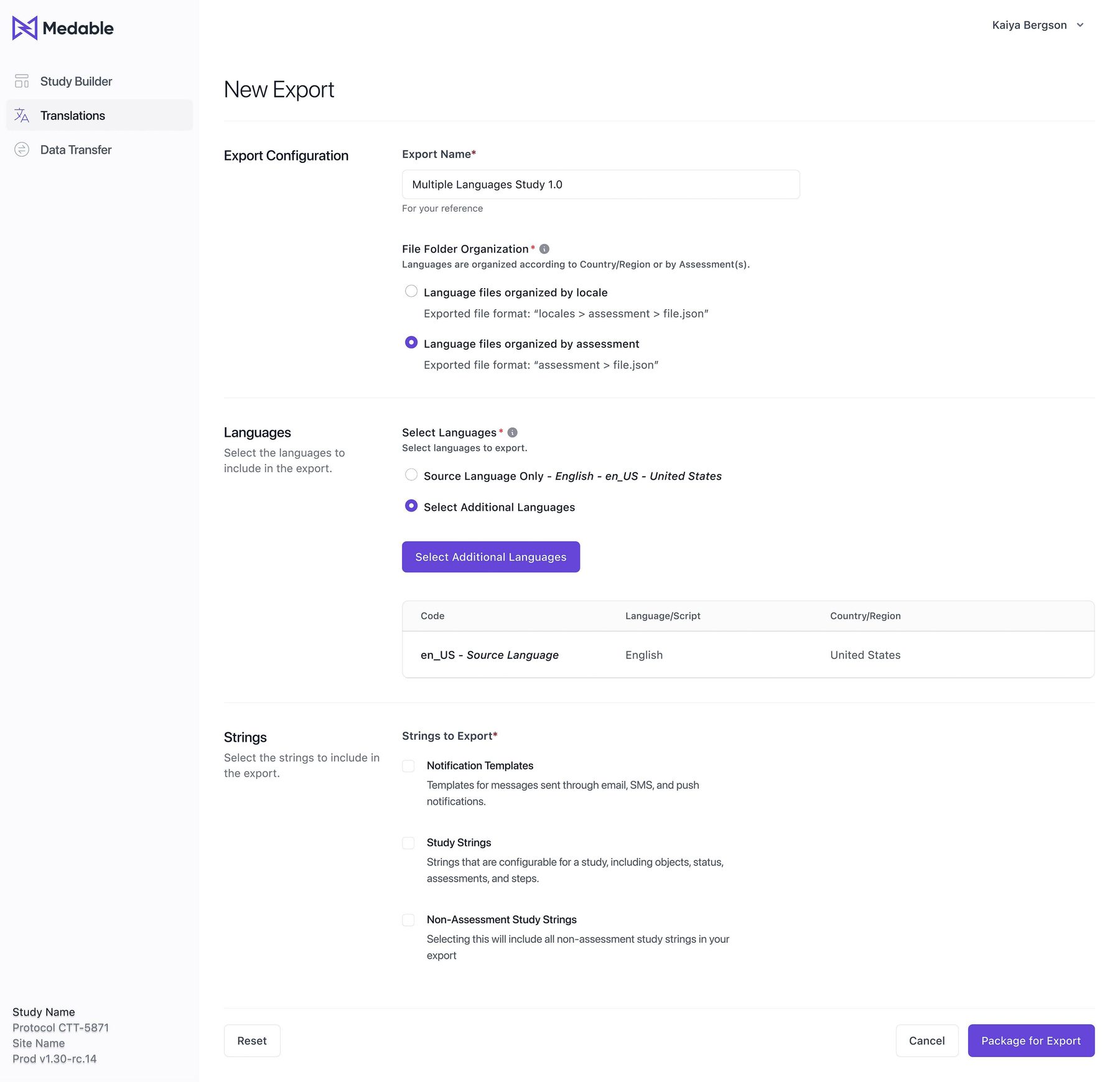 Additional languages
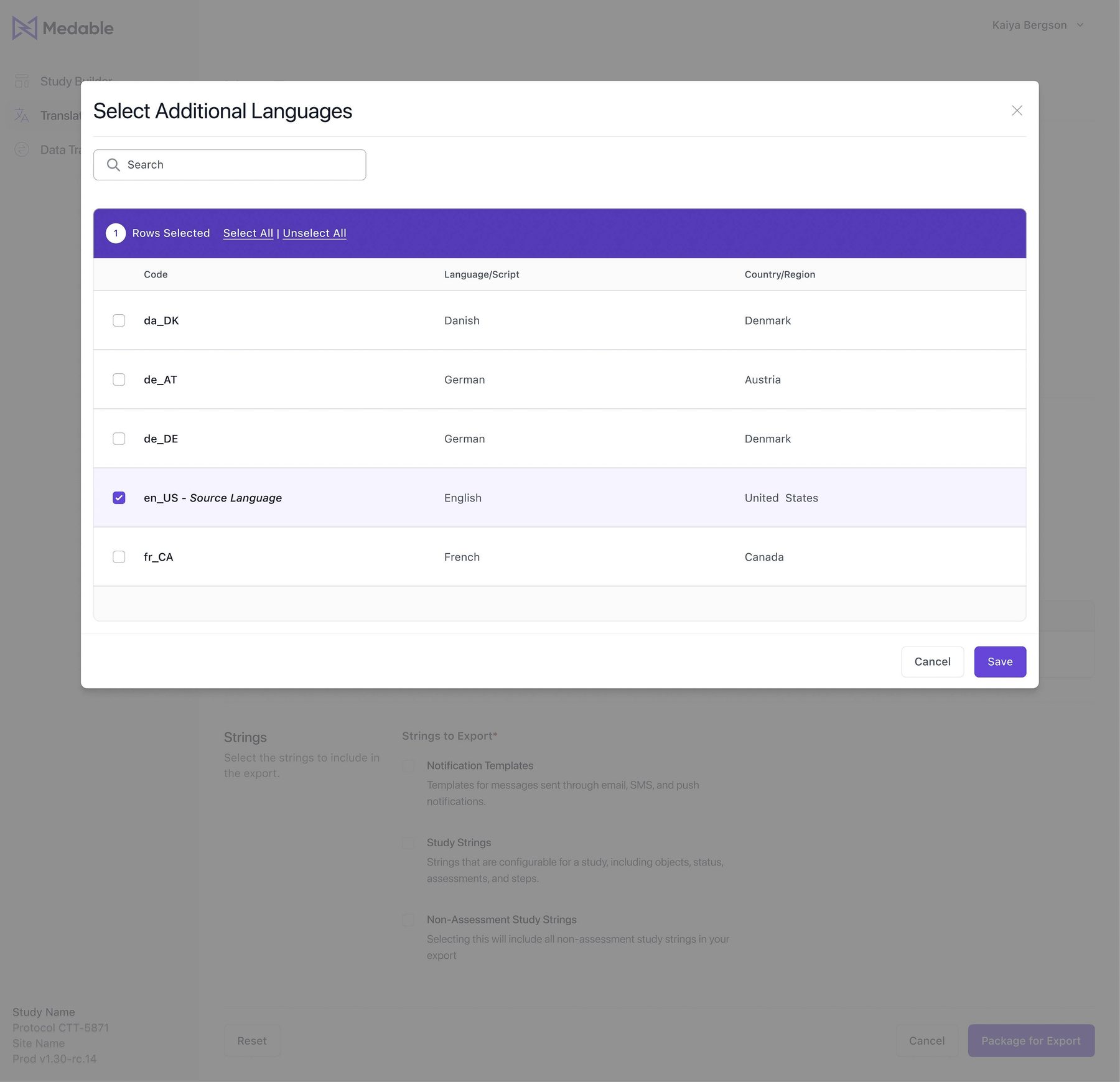 Languages modal
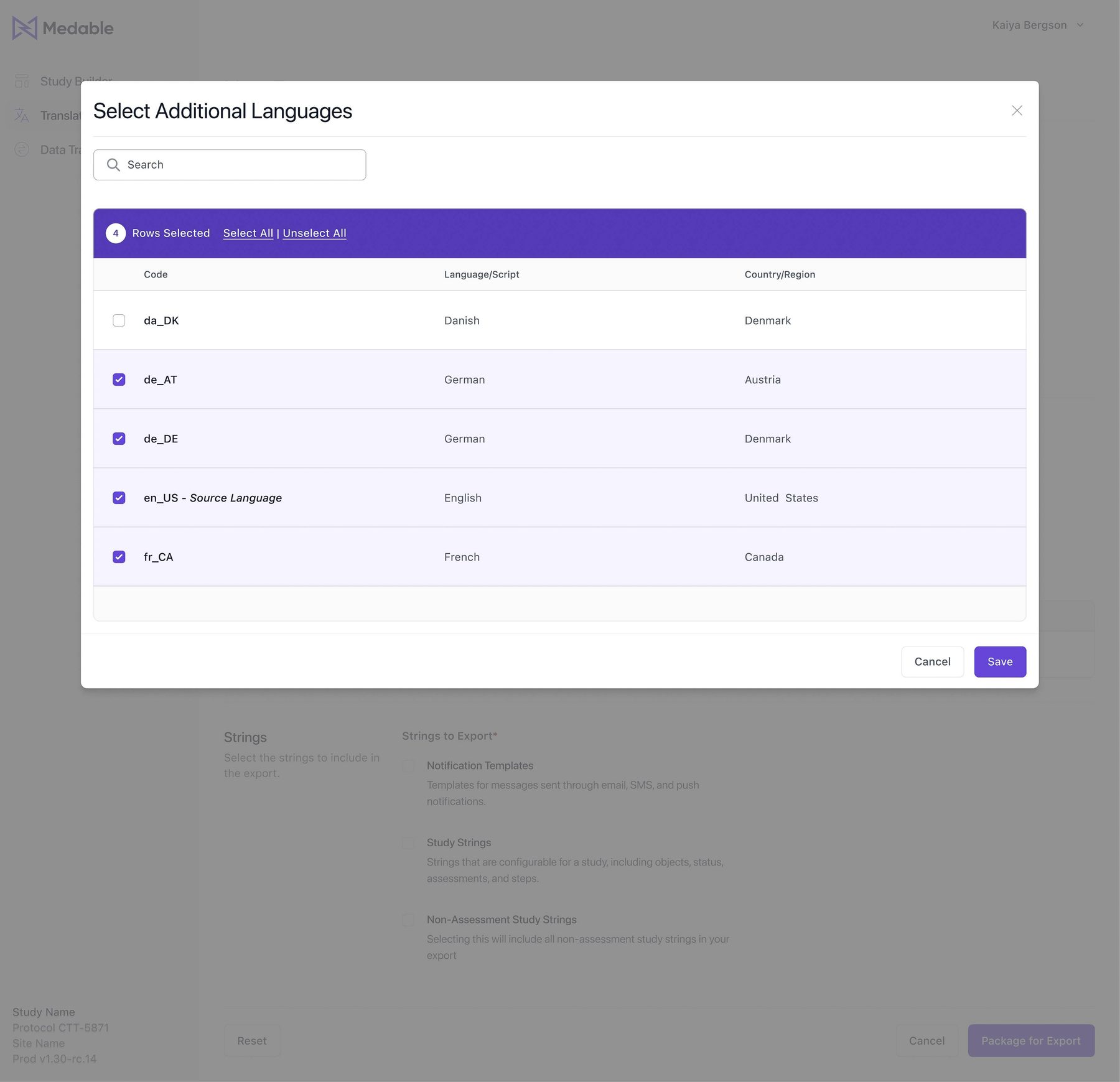 Languages selected
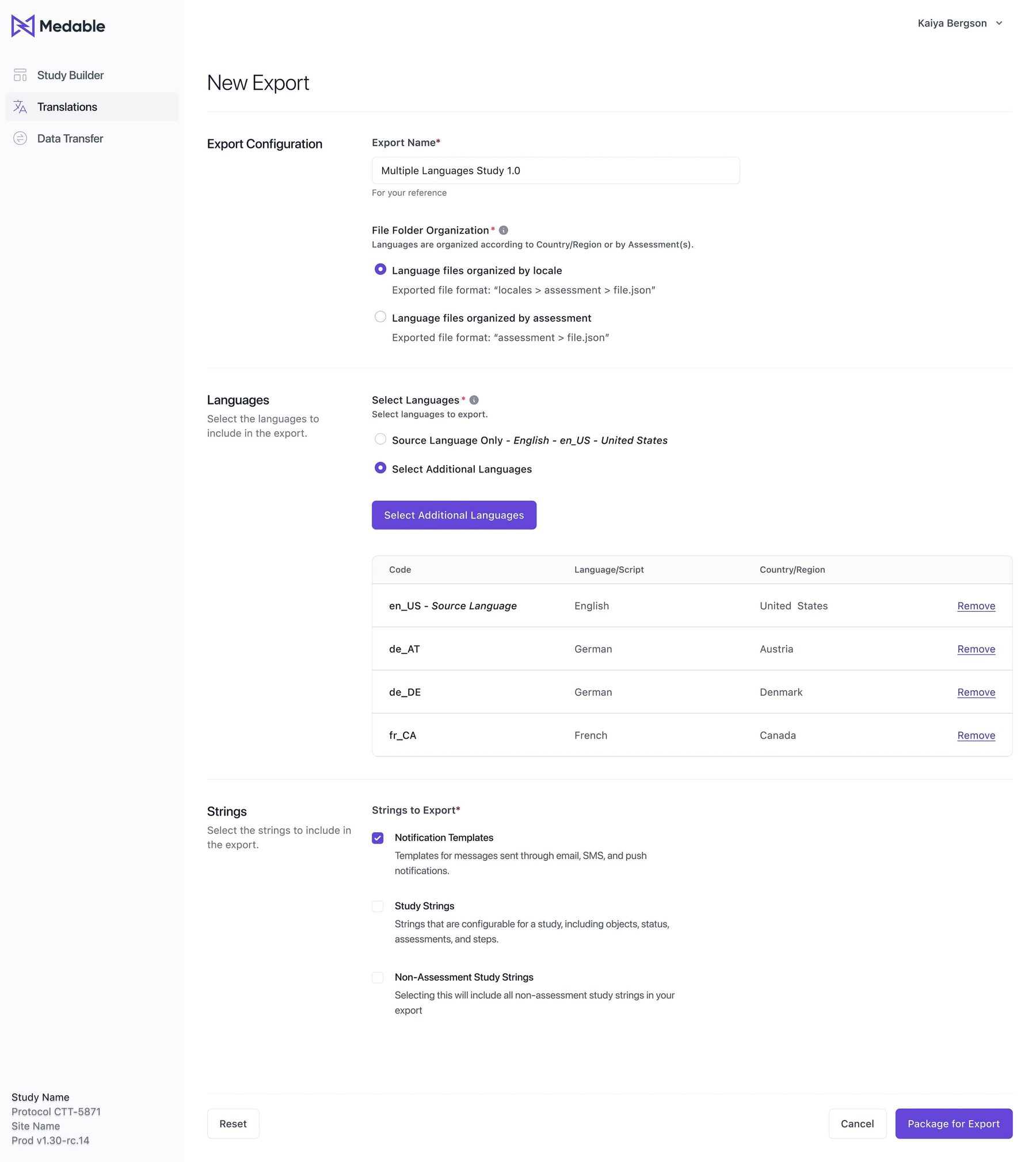 Push notifications
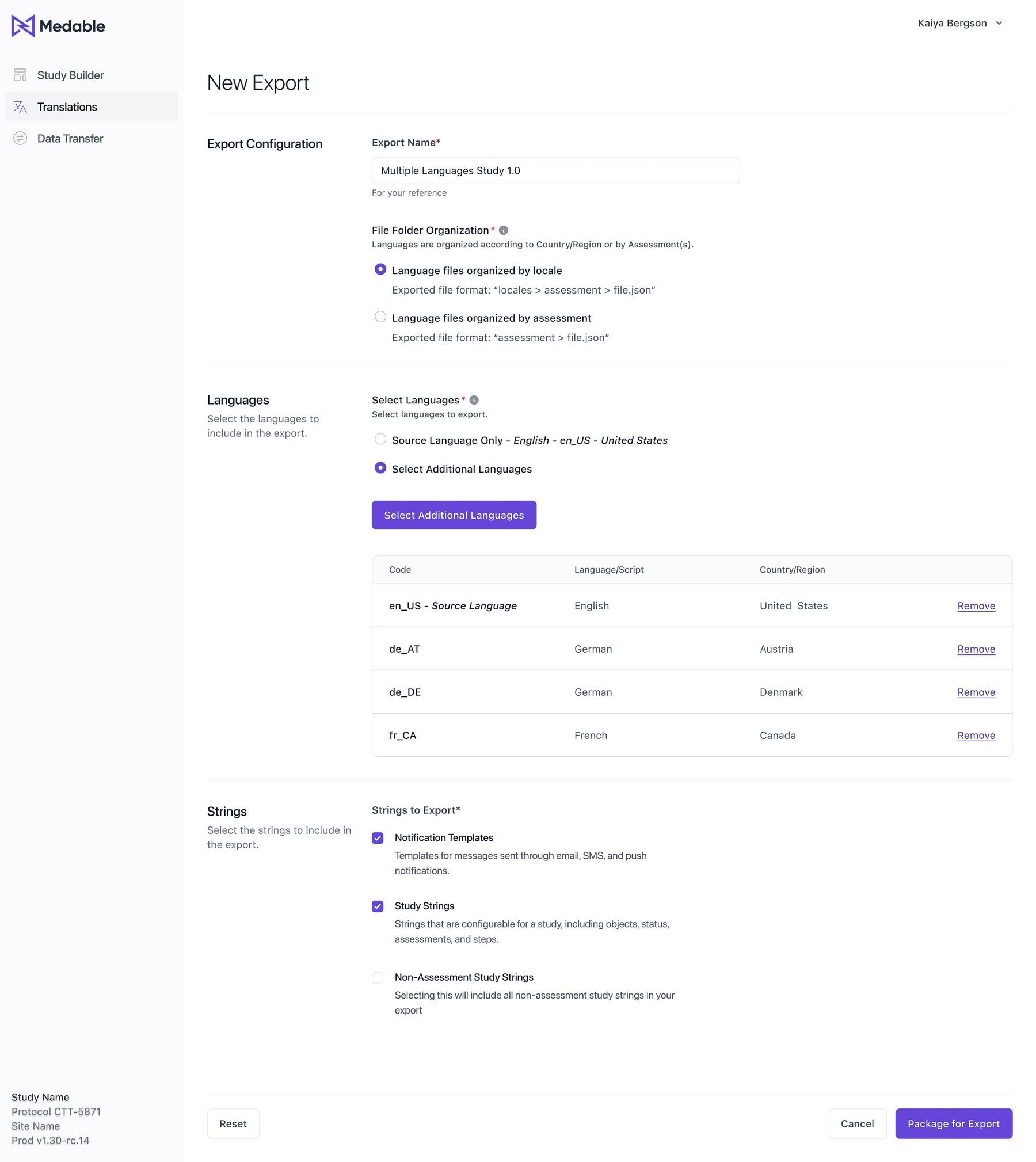 Study strings
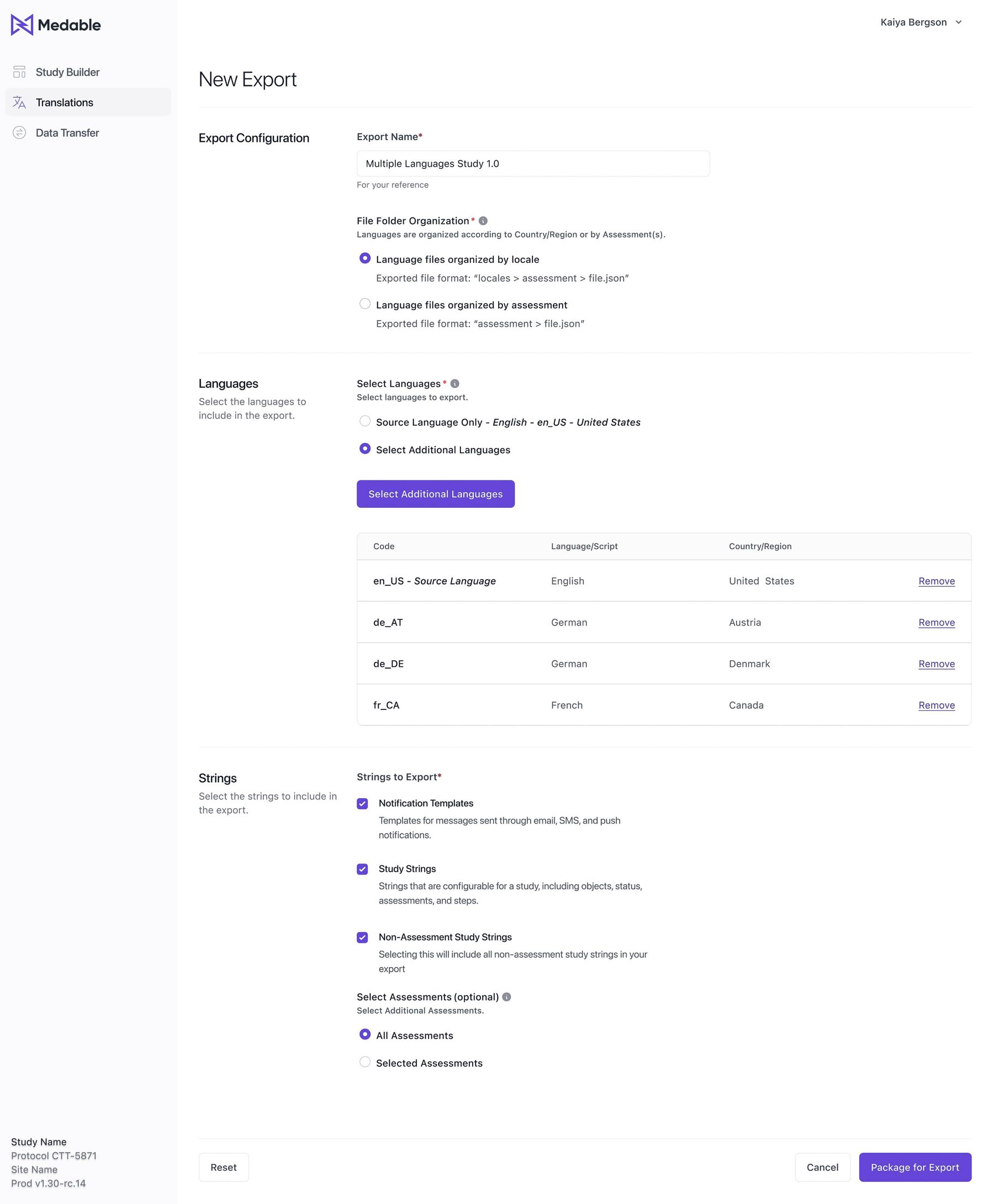 Non-assessment strings
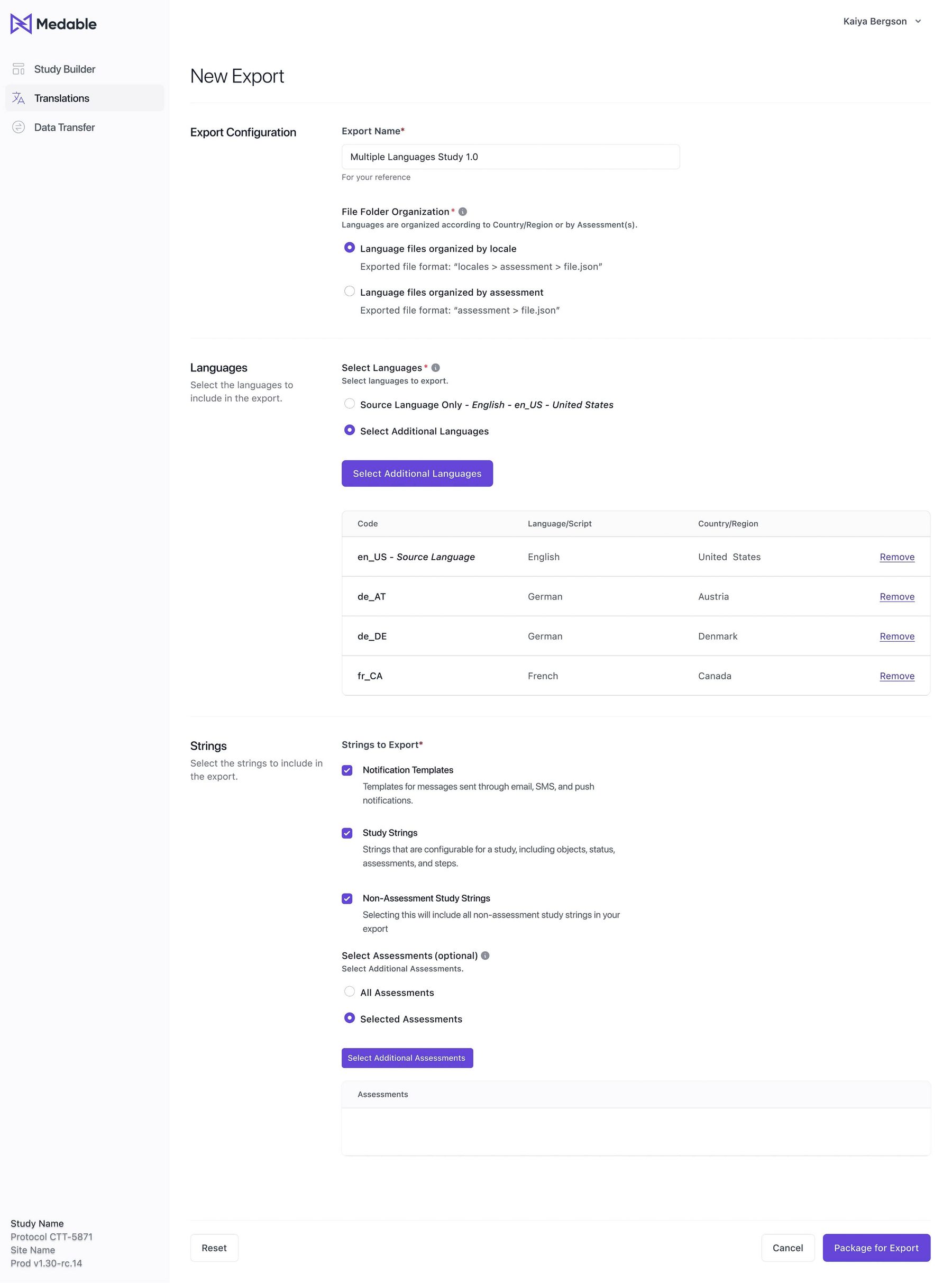 Select assessments
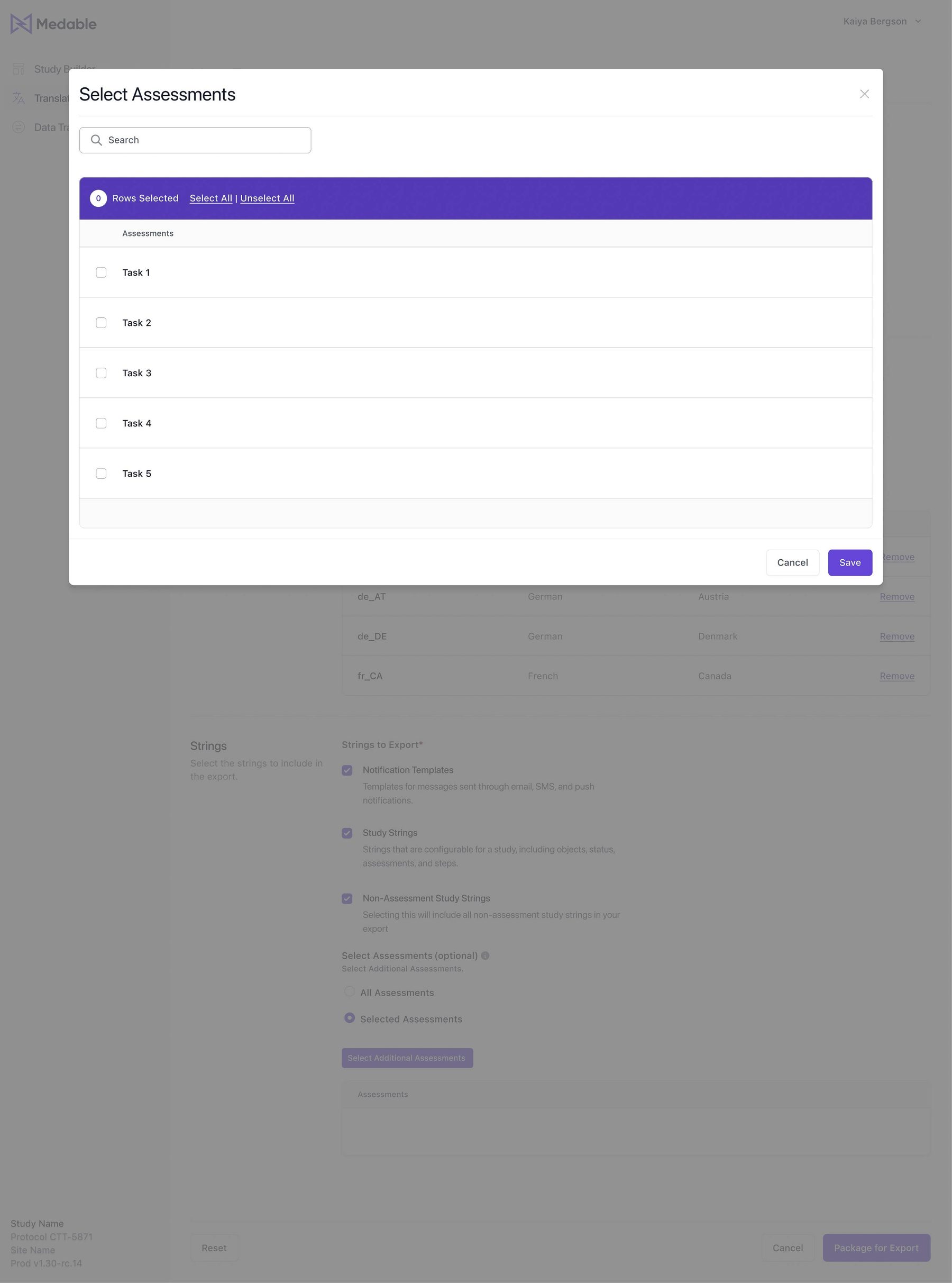 Assessments modal
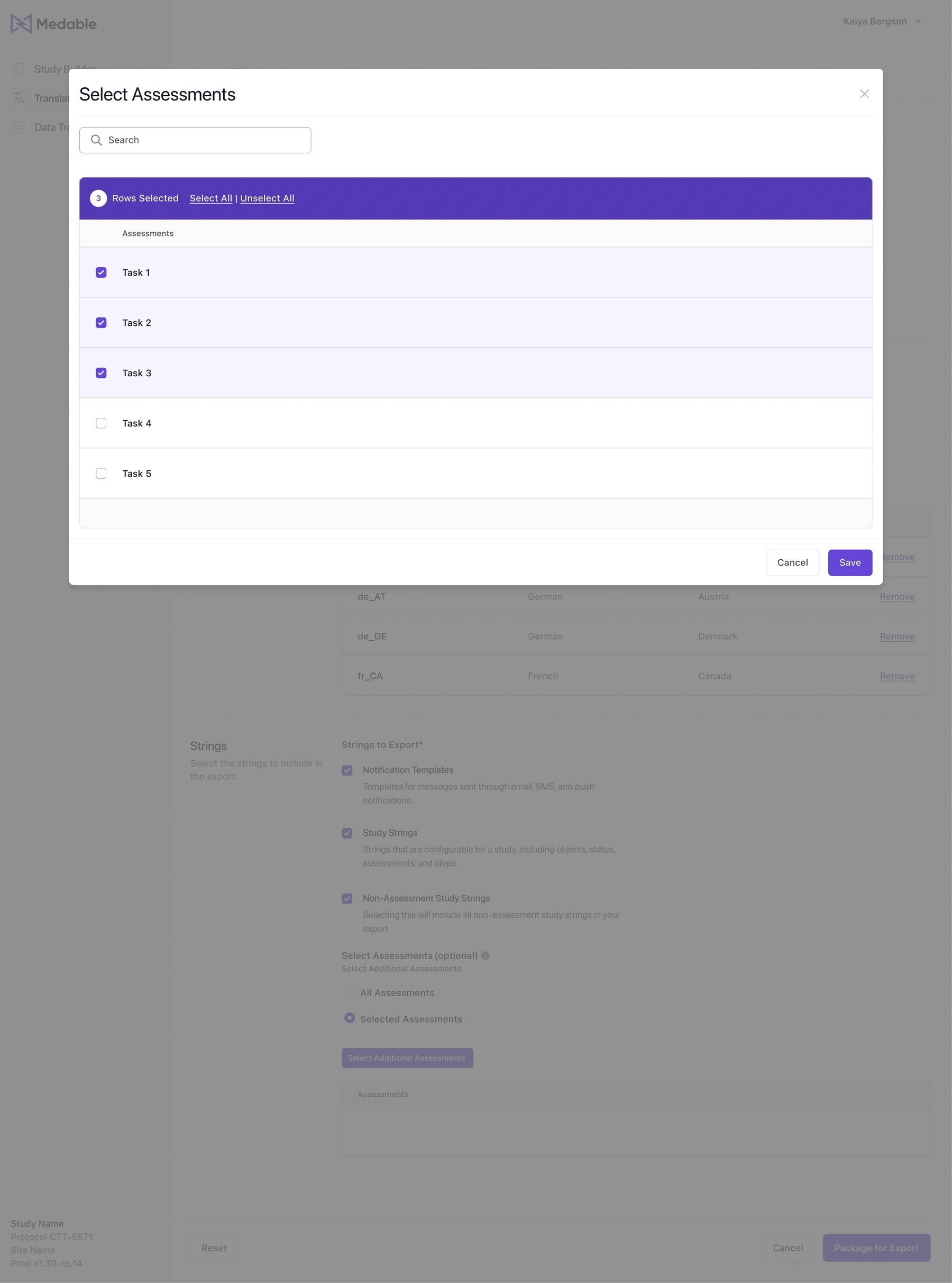 Assessments selected
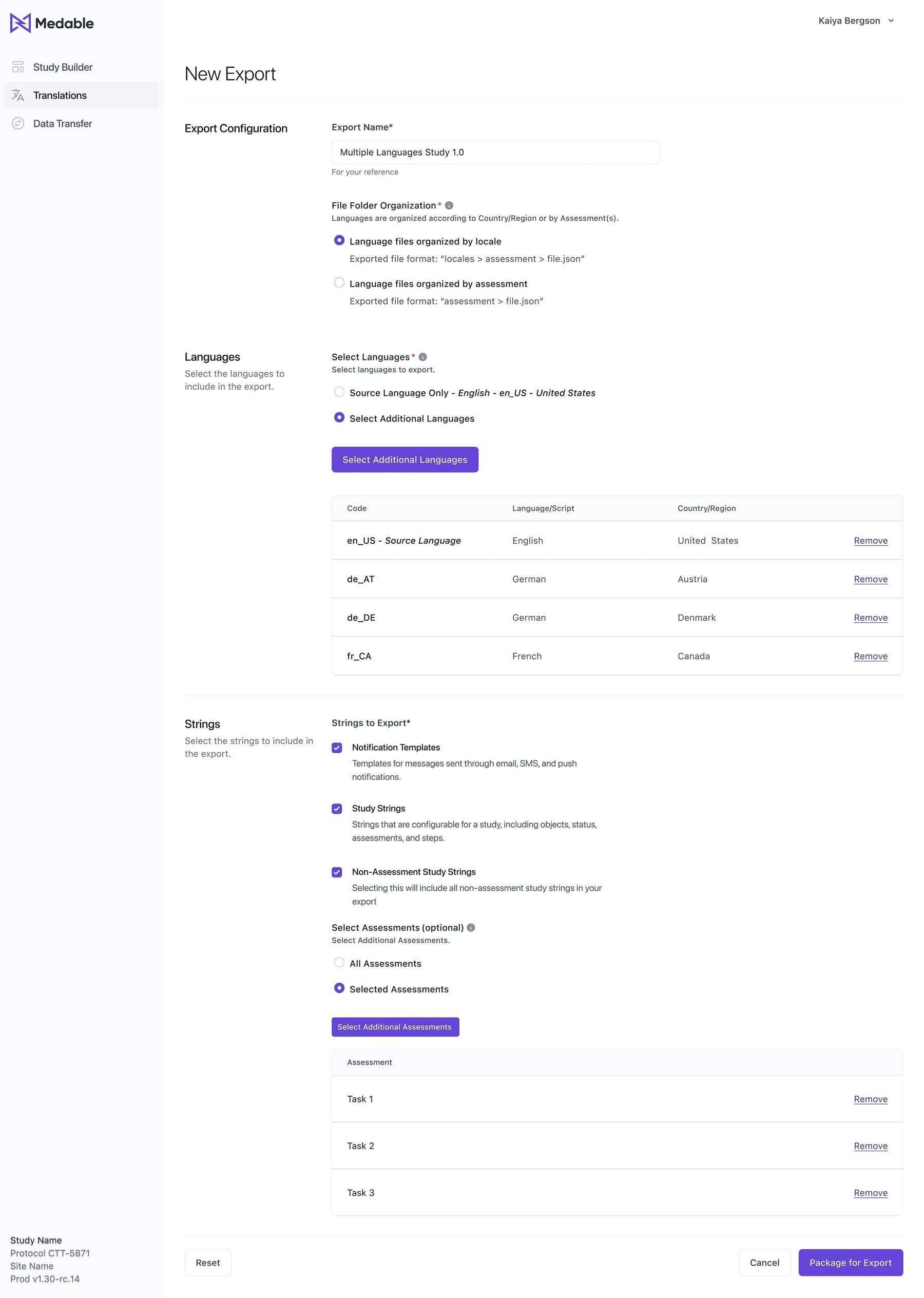 Package request
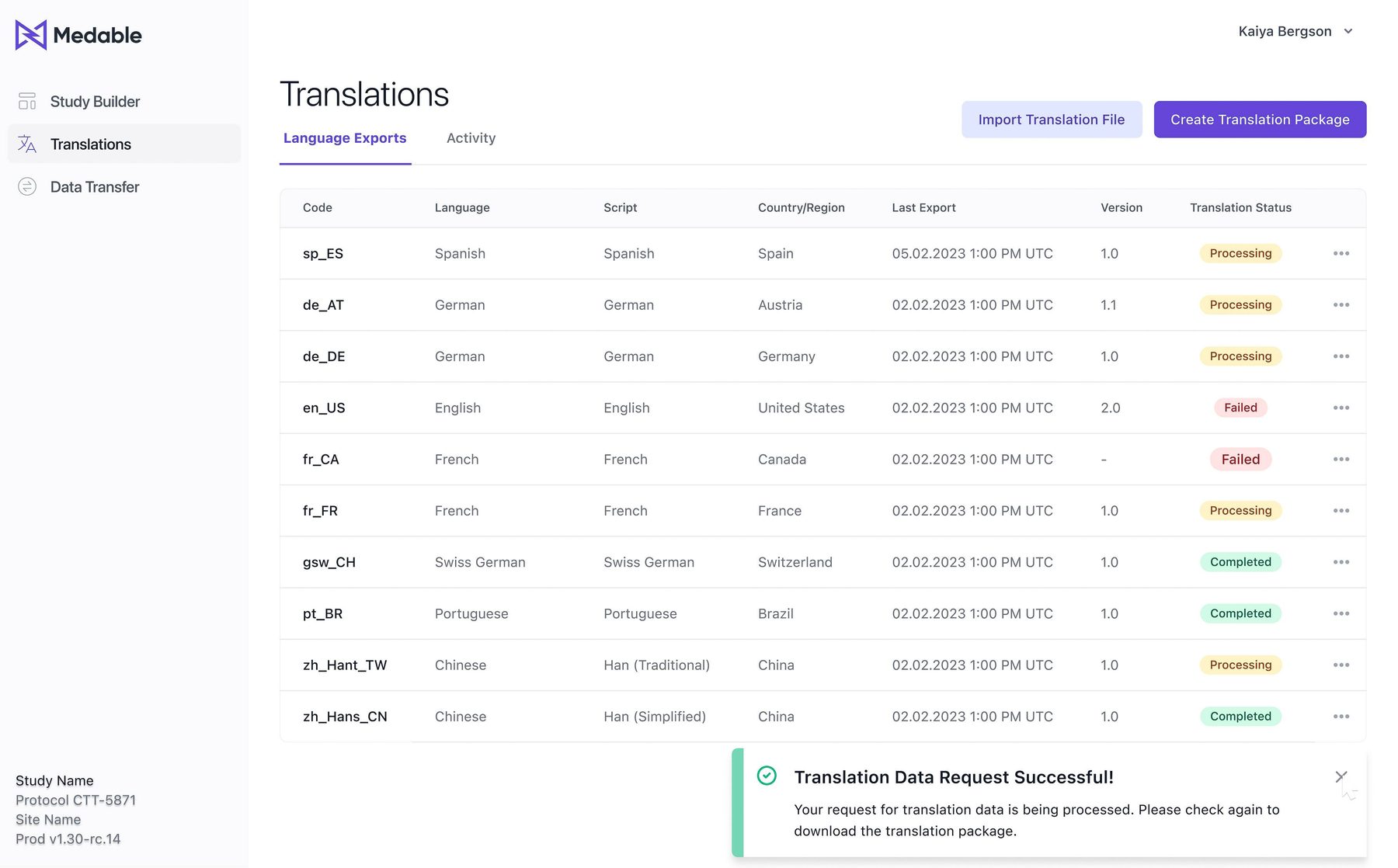 Request confirmed
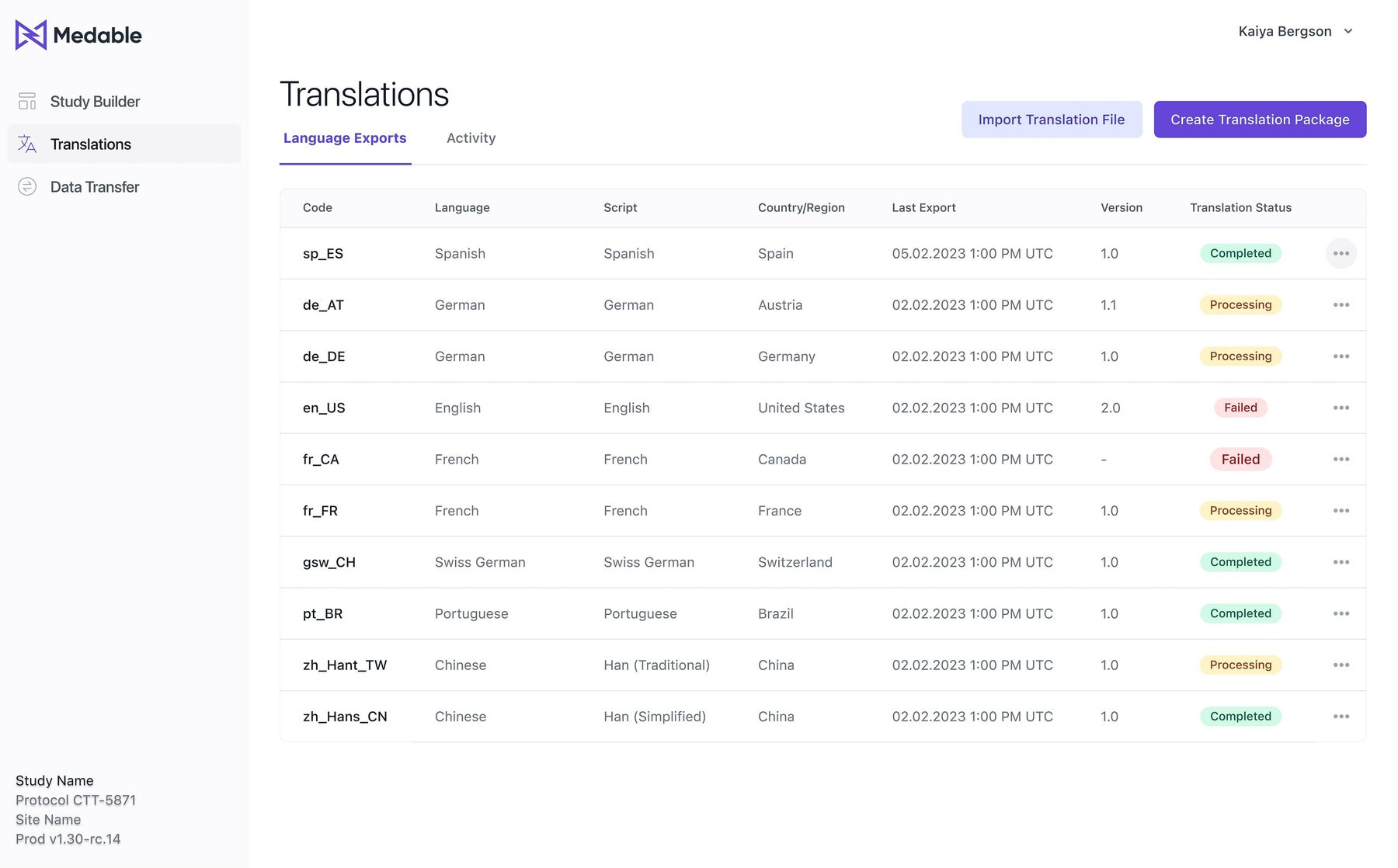 Ready for download
The output
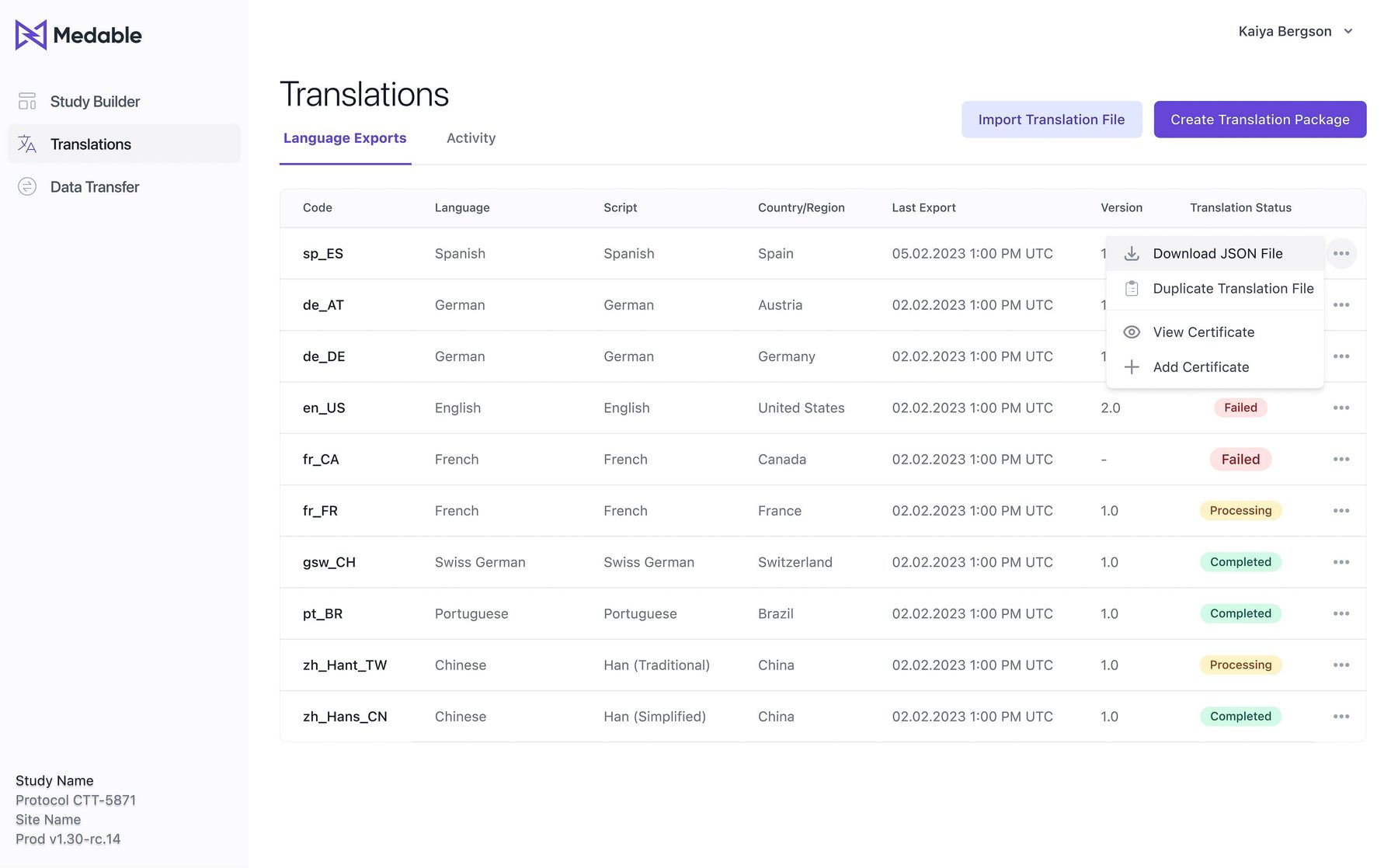
08 · outcome
Outcome
In the first 30 days of the pilot, translation prep fell from 72 to 17 hours per language, and the repeat clean-up cycles stopped. Enterprise prospects began asking for early access, which turned an internal fix into something Medable could sell.
- 76%less translation prep time
- +45points on the clinical trial managers' Net Promoter Score
- ~$220Kprojected annual savings
- 0repeat clean-up cycles in production
what trial managers said
They cited "clarity," "confidence," and "finally feeling in control of the workflow."
customer success
Tickets fell from 38 to 6 a week, which freed the team for studies that needed them.
regulatory
FDA submission readiness rose from 67% to 97%.
What I learned
continuous discovery is an operating system
Weekly contact built trust and shared ownership across Product, Engineering and Clinical.
artifacts drive alignment
Personas, journey maps and principles were the tools that got teams to agree.
design with engineers early
Writing the schema together avoided weeks of rework.
change is emotional
Training, context and a phased rollout respected people's habits and worries.
design can reduce regulatory risk
The result was an auditable, compliant system, not only a better screen.
keep research traceable
Linking every insight to a design artifact made the research ready for an audit.