01 · case study · co-founder
Virtus Athlete Intelligence: six releases, from athlete onboarding to white label
Athletes and agencies needed a way to show brands what an athlete's sponsorship is worth. I co-founded Virtus and lead product, design and frontend engineering for the platform that measures it.
- role
- Co-founder and Head of Design. Product management. Frontend engineering architecture.
- dates
- October 2025 to present
- team
- CEO, CTO, a technical lead, a frontend engineer and an AI engineer
- platforms
- Desktop web, mobile web, native iOS and Android. teamvirtus.ai
- 6production releases
- 16 of 20eligible athletes used their media kits
- $280K+in verified sponsorship deals, secured by six athletes
- $290Kfrom agency, reseller and white-label sign-ups
01 · business need
The business need
Virtus needed a product that athletes would actually use and that agencies and partners would pay for. The bet behind the company: if an athlete can prove what their sponsorship is worth, brands will sign.
As co-founder I translate the CEO's vision into roadmap priorities, and I own the user experience, the product requirements and final acceptance of each release. I work with the CTO on what is feasible and in what order.
- 20signed athletes
- 16signed agencies
- 4platforms: desktop web, mobile web, iOS and Android
02 · customer needs
Five kinds of people, one question: what is this athlete worth?
I led discovery with athletes, agencies and brands to validate how sponsorship deals really happen. Five personas came out of it, and each release was written for one or more of them. Open a card to read the persona.
03 · how the work ran
From a request to a release, the same way every time
I run every release through the same product workflow, so nothing is built before it is understood and nothing ships before it is checked. AI agents draft many of the documents. I review, correct and approve each one before the team sees it.
- RequestA one-page intake: the problem, the evidence and who is asking.
- DiscoverySessions with athletes, agencies and brands. A hypothesis log and a competitive analysis.
- PrioritiesRoadmap priorities set with the CEO, weighed against customer value, business viability and engineering effort.
- RequirementsA project brief and a PRD for each release, then epics, user stories and acceptance criteria.
- DesignUser flows, low-fidelity wireframes, then Figma with the Virtus Design System.
- ReviewDesign critique, usability and accessibility checks before any build starts.
- BuildFigma to production code through Figma MCP and Claude Code. Sprint planning and the Jira backlog.
- ReleaseRelease notes and my final acceptance of the release.
- MeasureAdoption in Pendo, and deals verified with the athletes.
what the agents did
Drafted briefs, PRDs, flows, wireframes and tickets, and helped turn Figma designs into frontend code.
what stayed with me
Which problems to solve, what to measure, the priorities with the CEO, and acceptance of every release.
one correction
The agents over-built: more flows, tickets and features than a release needed. I cut the scope back to what mattered for that release.
04 · decision 1 of 4
Decide what to measure before designing a screen
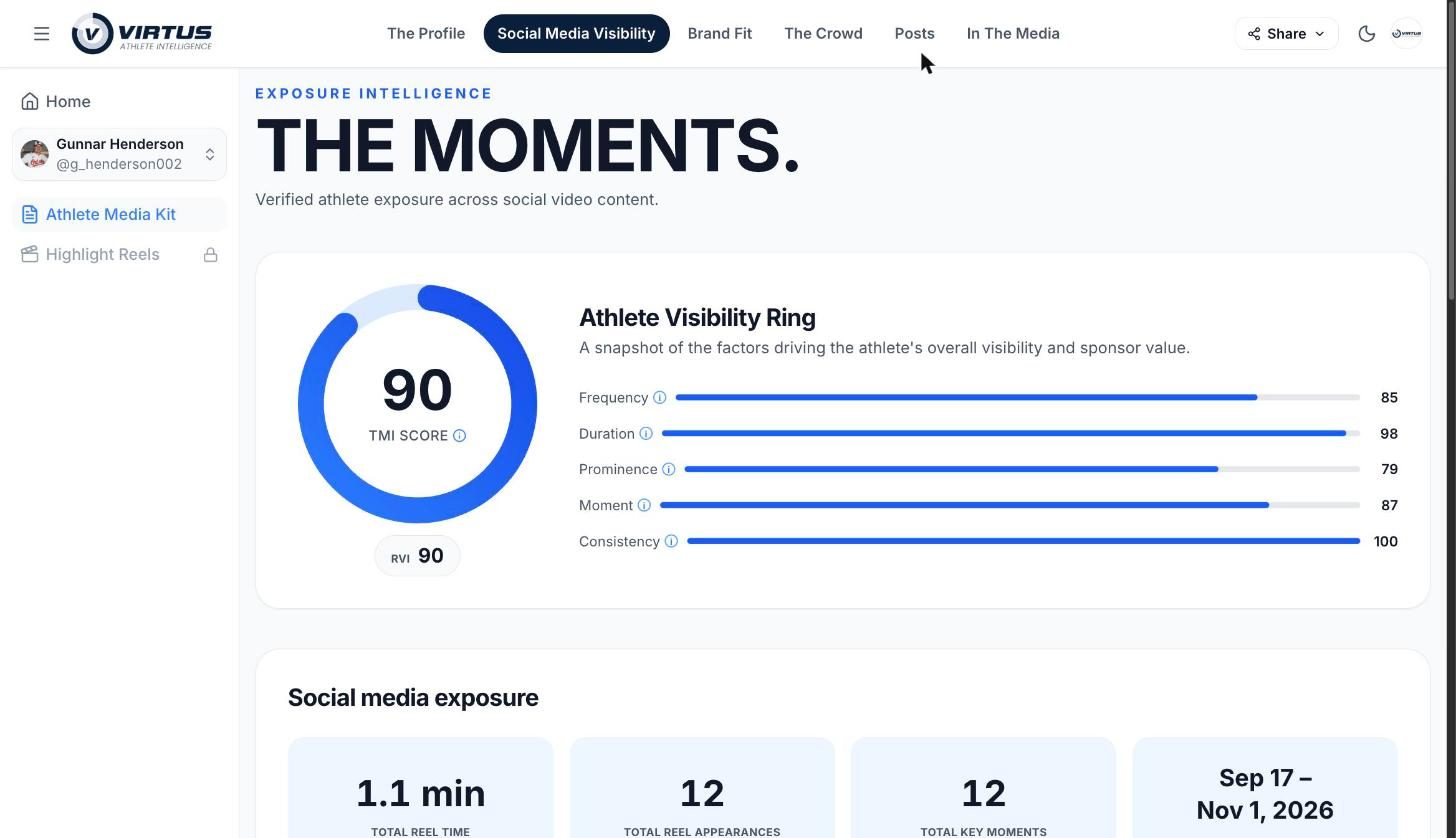
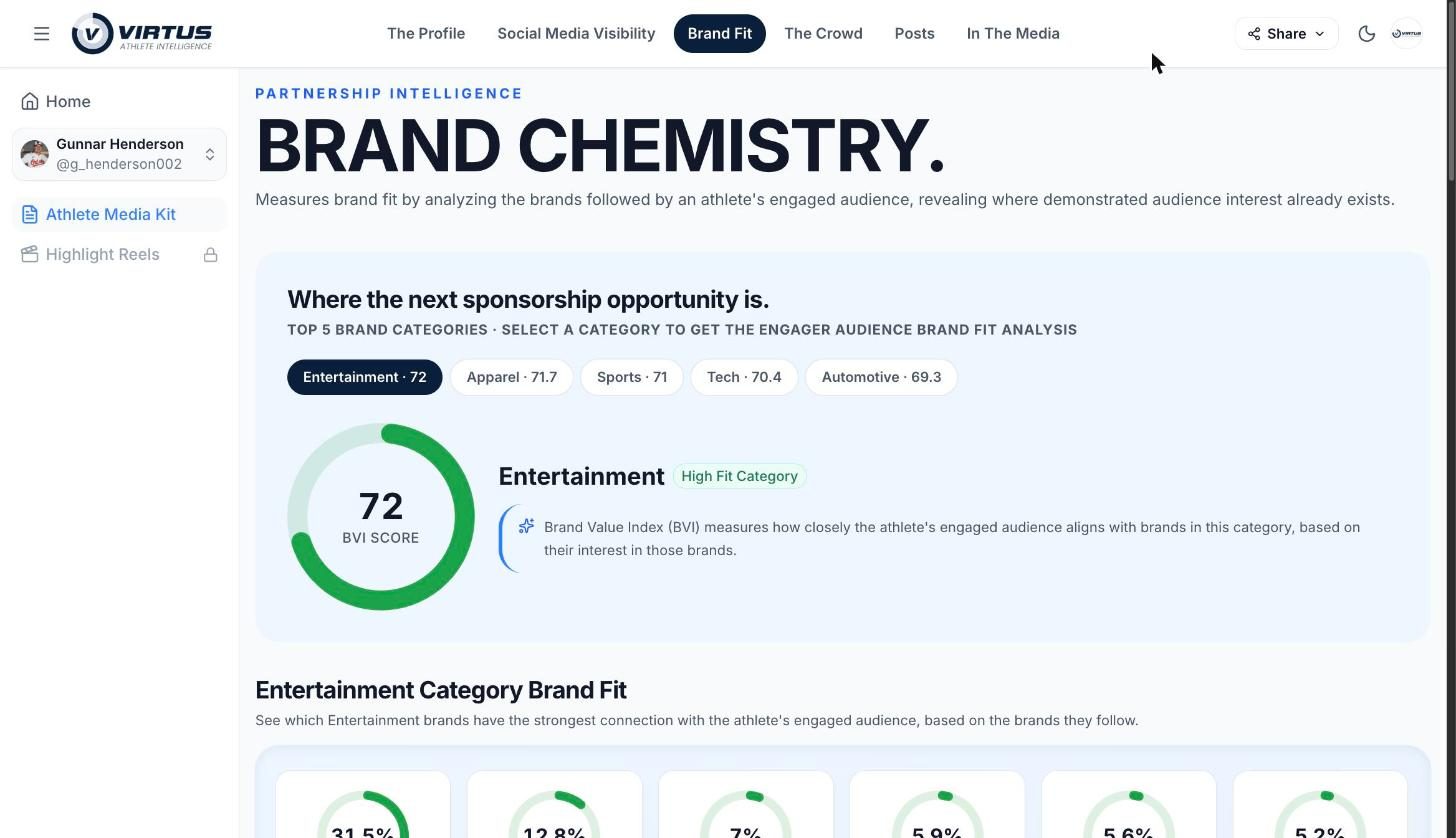
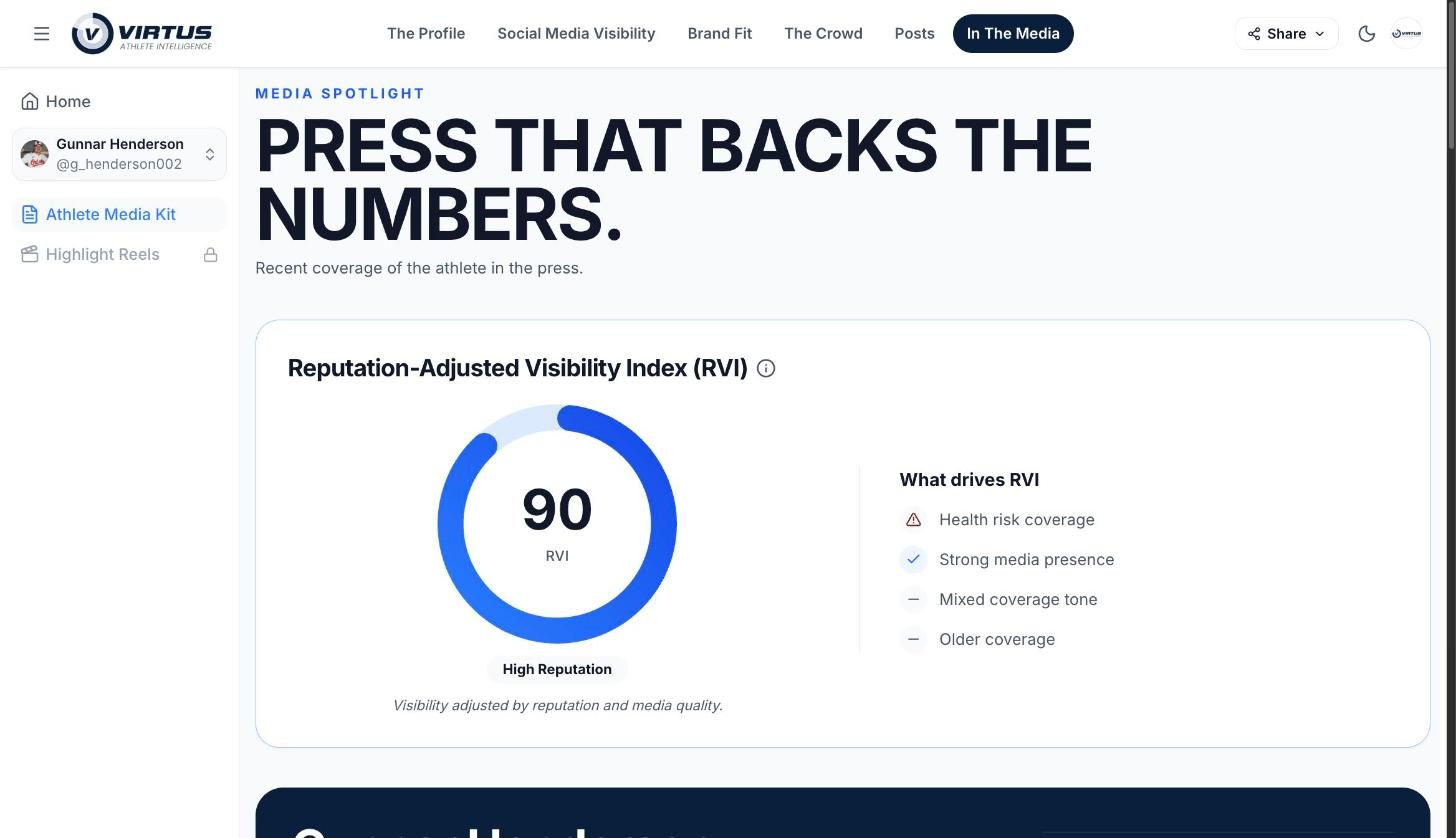
A sponsor needs a reason to believe an athlete is worth the deal. I turned down follower counts as the main measure, because followers alone do not show what a sponsor gets. Instead I developed frameworks for visibility, brand value and reputation, and the platform turns each into a score.
- TMITop Of Mind Index. How visible the athlete is on screen, scored on five dimensions.
- BVIBrand Value Index. Brand fit, scored by category.
- RVIReputational Value Index. Built from press coverage.
- TSSTotal Sponsorship Score. One number for an athlete's total value to sponsors.
04 · decision 2 of 4
Grow from one athlete to whole rosters, then to partners
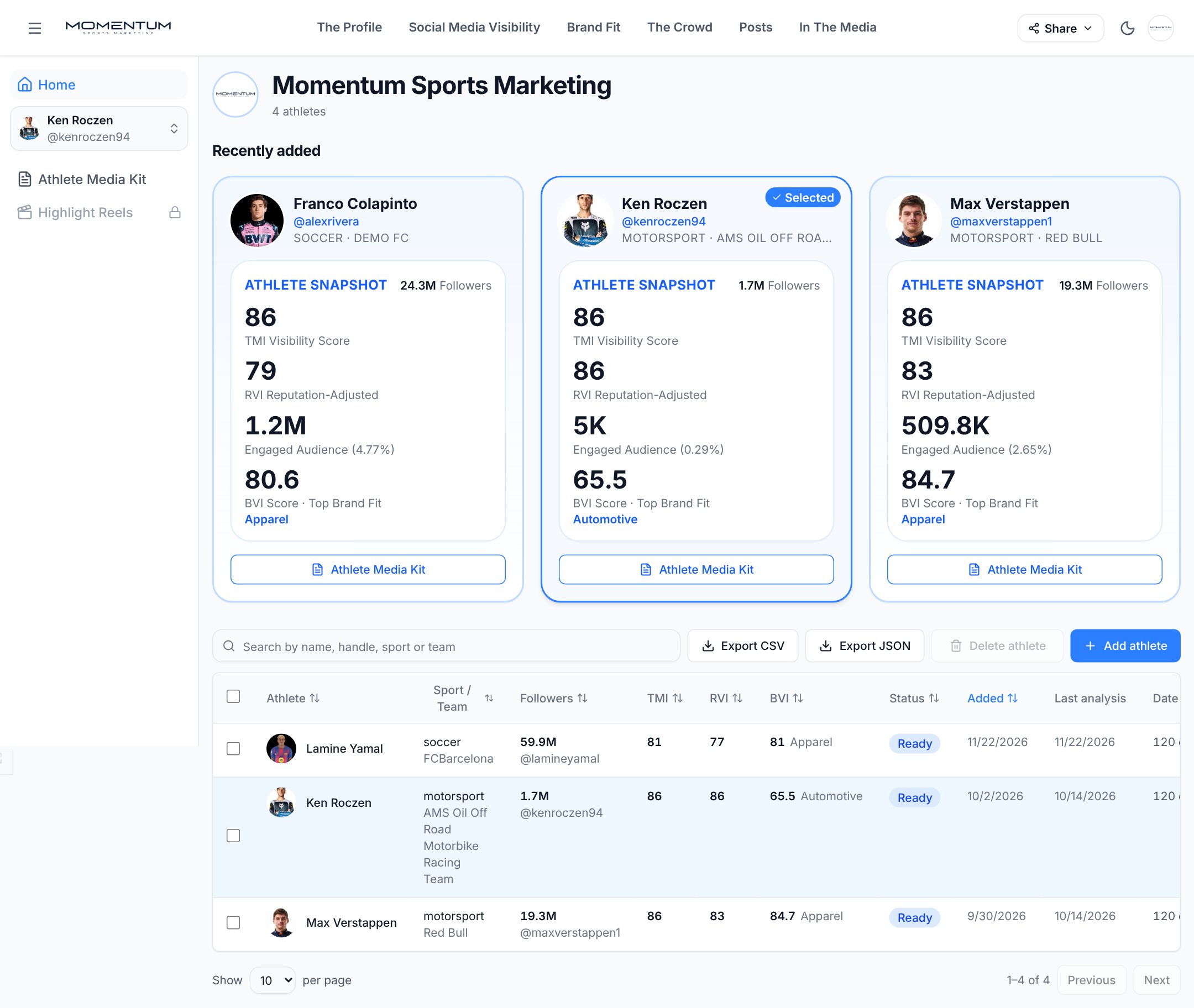
The first release served one athlete at a time. The revenue was in the organisations that manage many. I prioritised the agency dashboard next, then university dashboards, then white-label tools so a partner can run the platform under its own brand, and a sponsor portal.
- $290Kfrom agency, reseller and white-label sign-ups
- 16signed agencies
- AgencyOnboarding, add athletes, manage athletes, get the Media Kit.
- White labelPartner branding on the same platform, plus a sponsor portal.
04 · decision 3 of 4
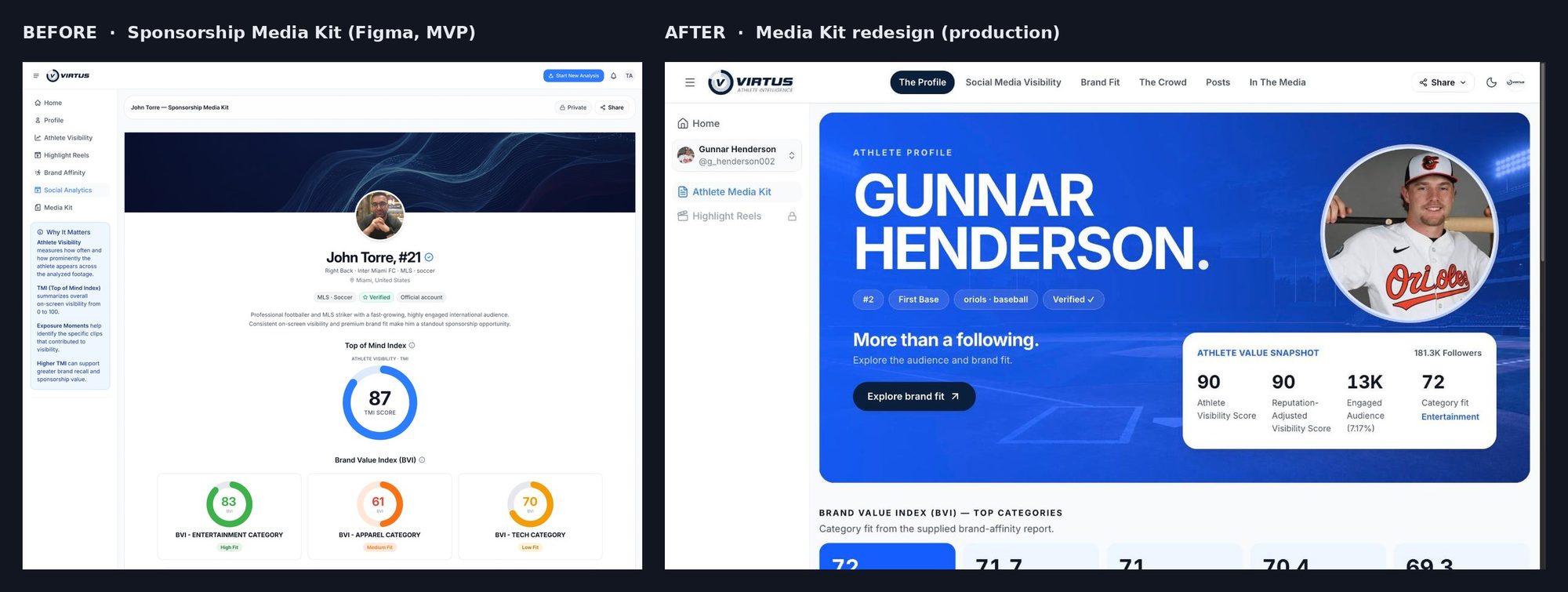
Redesign the Media Kit around how athletes read
Early founding-member athletes, collegiate baseball players and professional soccer players, said the Media Kit was hard to read and out of sync with how athletes view content. I rebuilt it from one long dashboard page into tabs, with public and private sharing.
- objective
- Make the Media Kit athlete- and agency-friendly, marketable and trendy.
- the feedback
- Hard to read. Out of sync with how athletes view content. Too corporate.
- three principles
- Make the numbers stand out. Make it easy to read. Make it something athletes and agencies relate to.
- path to code
- Concept, then Figma with the Virtus Design System, then Figma MCP and Claude Code, then production.
04 · decision 4 of 4
Give agencies answers about the whole roster: Ask AI
Every analysis lived one athlete at a time. Before any build, I took Ask AI through the full workflow, from the request to an approved backlog.
- problem
- No roster view. To answer "which of my athletes best fit apparel?", an agent opened every athlete's dashboard and compared them by hand.
- what closes deals
- Audience questions. Brands ask who the fans are, where they live, what they are into and how engaged they are.
- solution
- An AI agent on the Virtus data pipeline that turns per-athlete data into roster-level answers in plain words.
- two ways in
- Automated Insights: ready-made cards for people who do not know what to ask. Custom Insights: a question box and a conversation.
- the rule
- Every number comes from Virtus data and is cited.
- success measure
- Helpful answers and insights saved or reopened per active account.
- 21user flows
- 3sets of low-fidelity wireframes: agency, university, mobile
- 116tickets in one Jira epic, each reviewed before it was published
Four of the user flows
Each flow was drawn and approved before any wireframe. Lime is an end state, a dashed box is a system step and red is an honest gap, where the product says what it cannot answer.
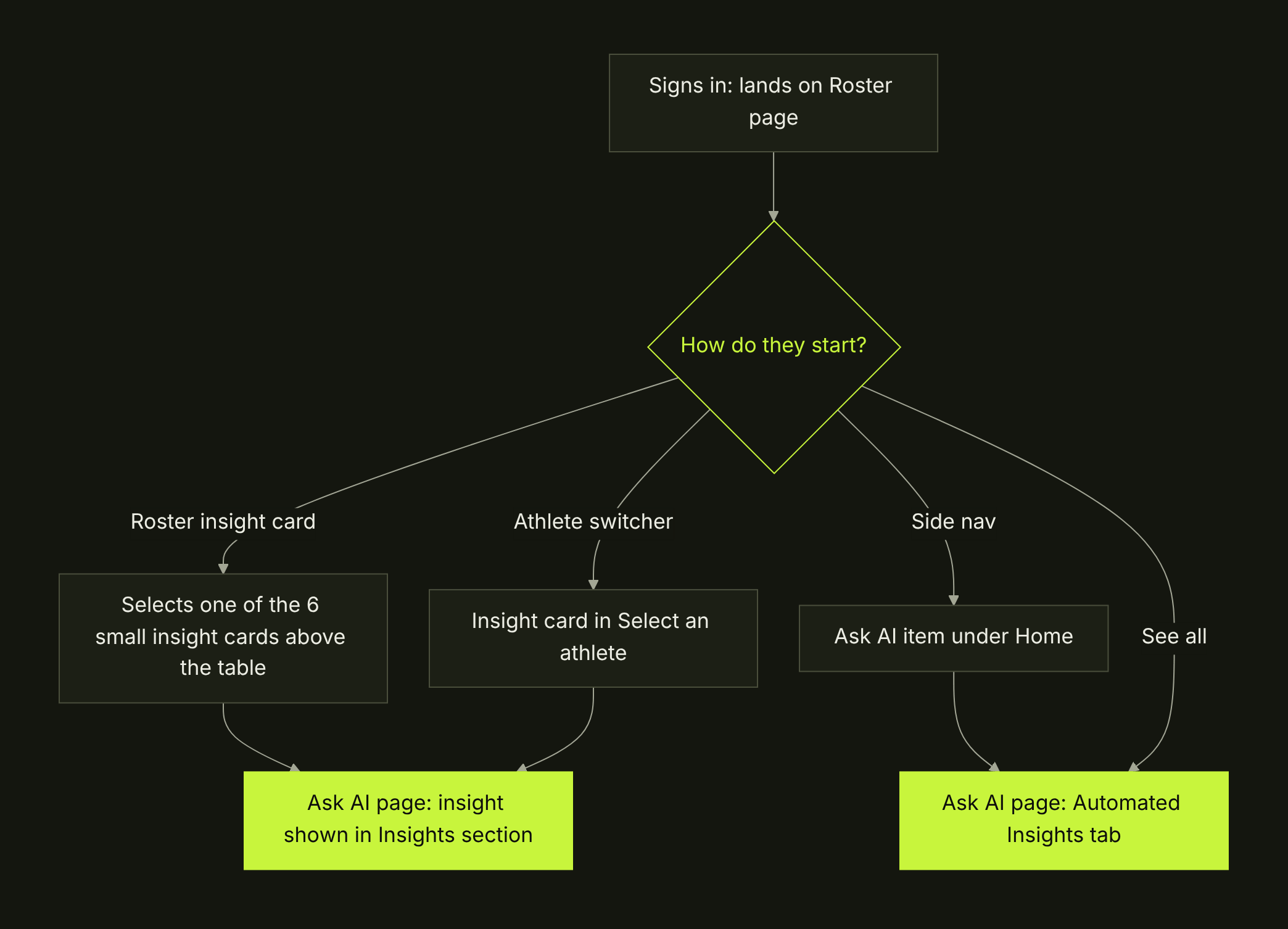
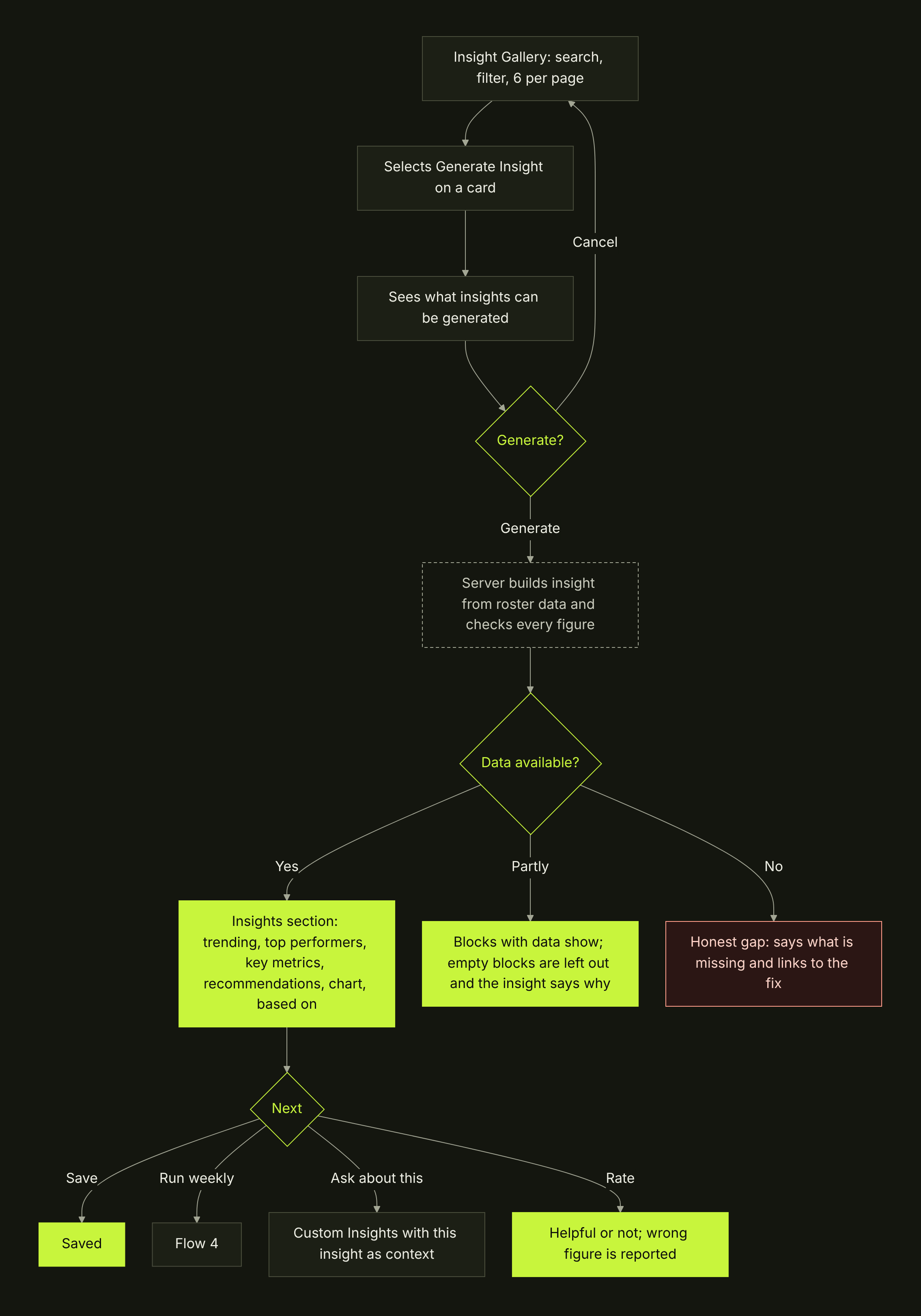
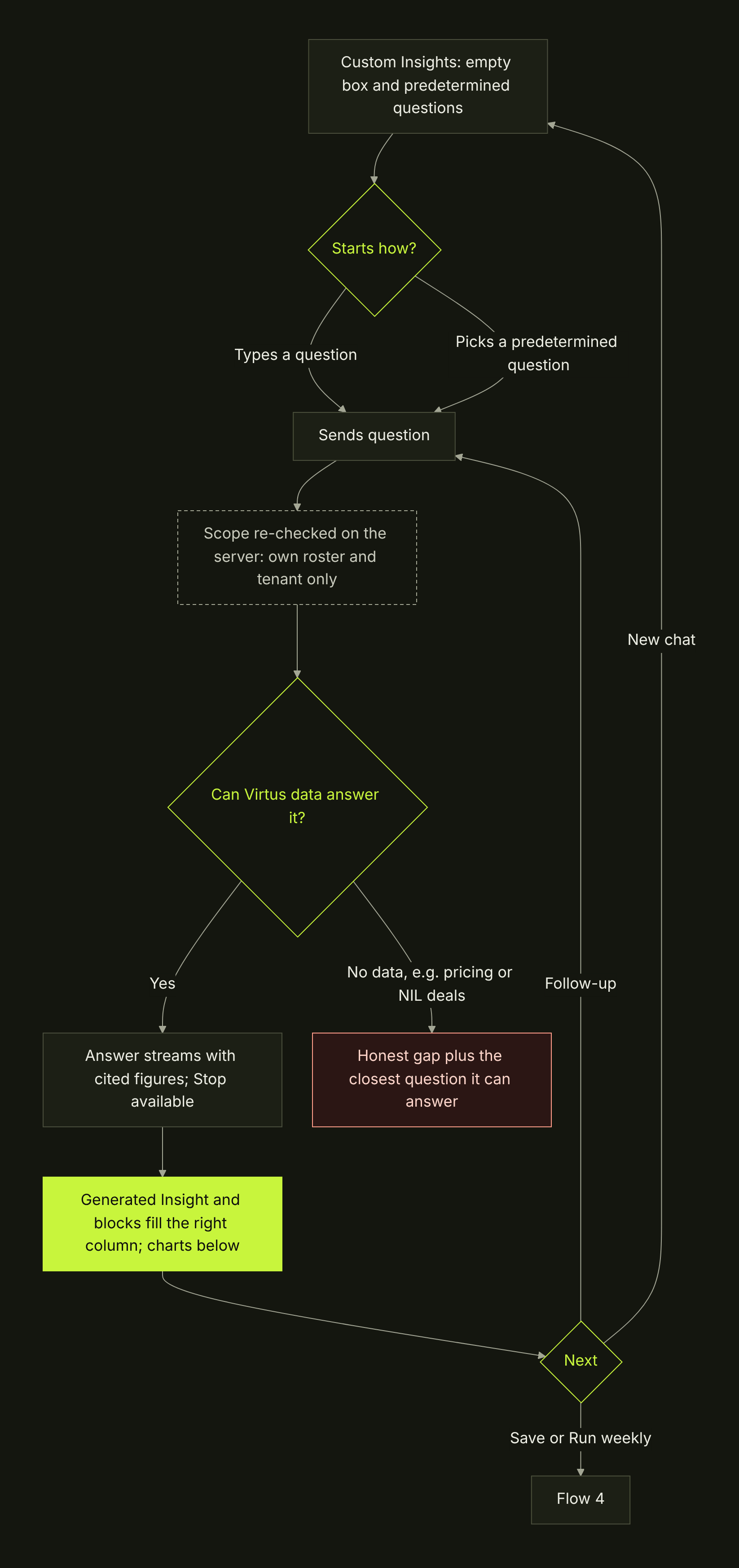
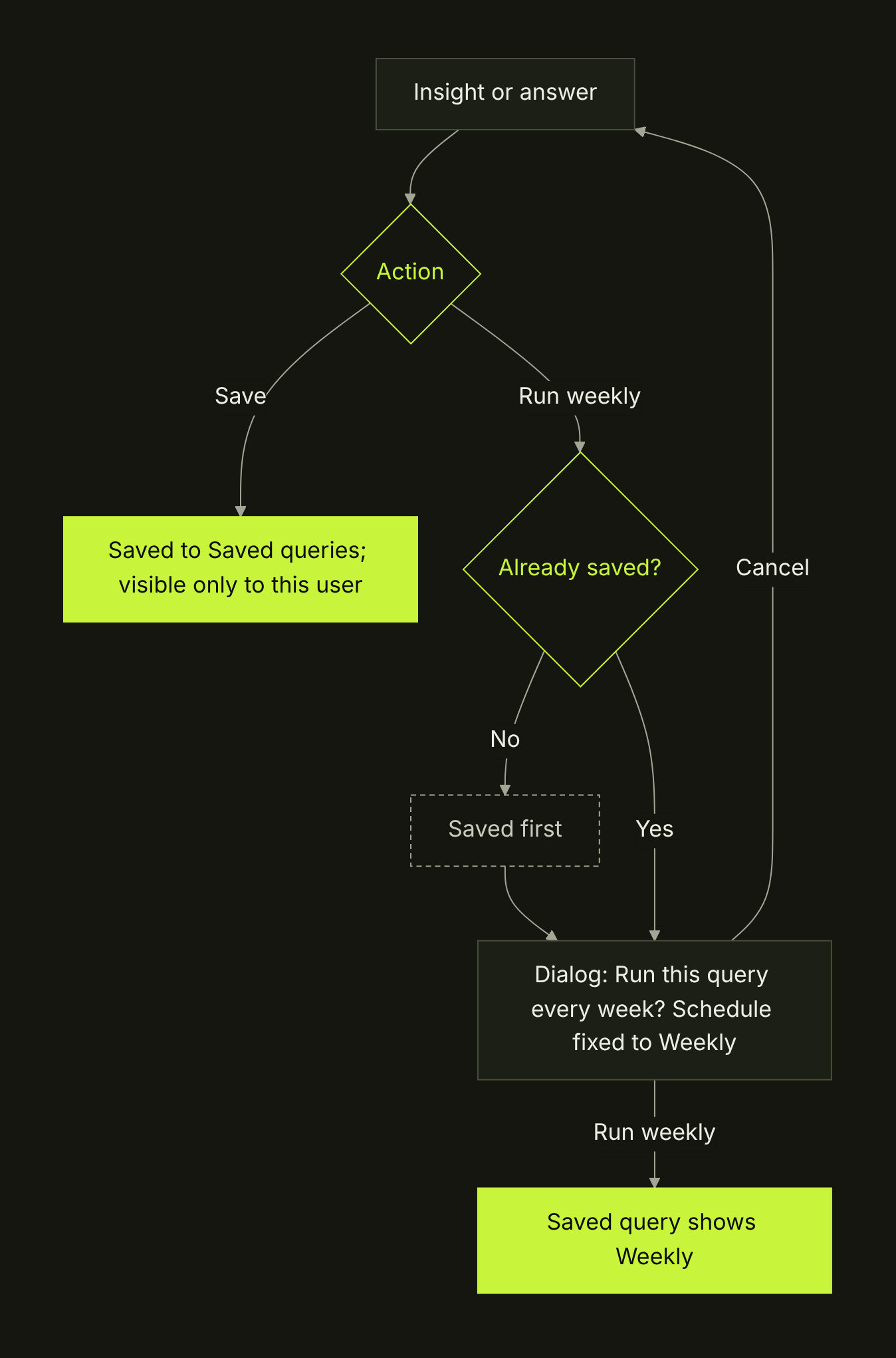
Tap a diagram to zoom in. Tap again to zoom out.
05 · visual craft
The Virtus Design System
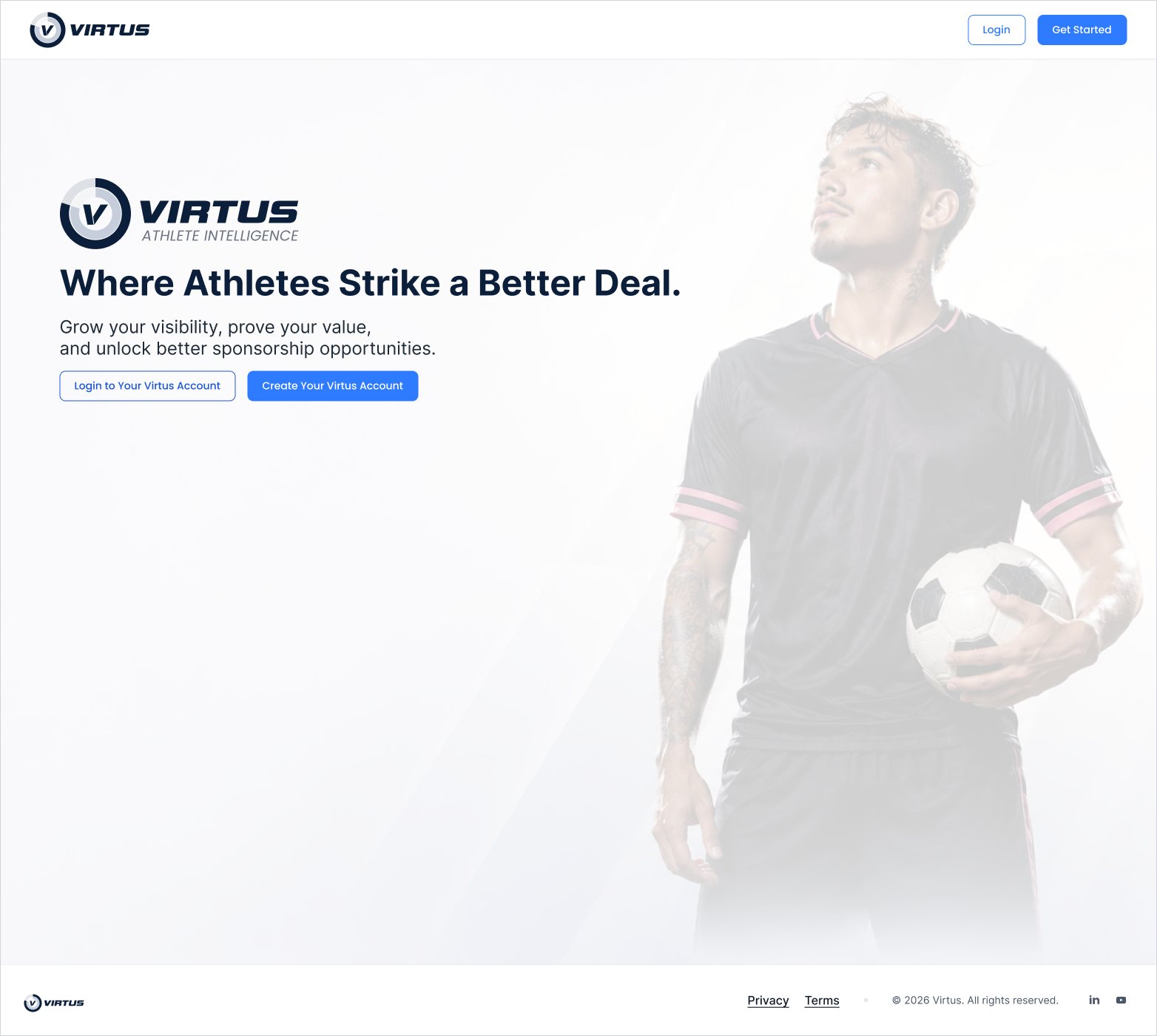
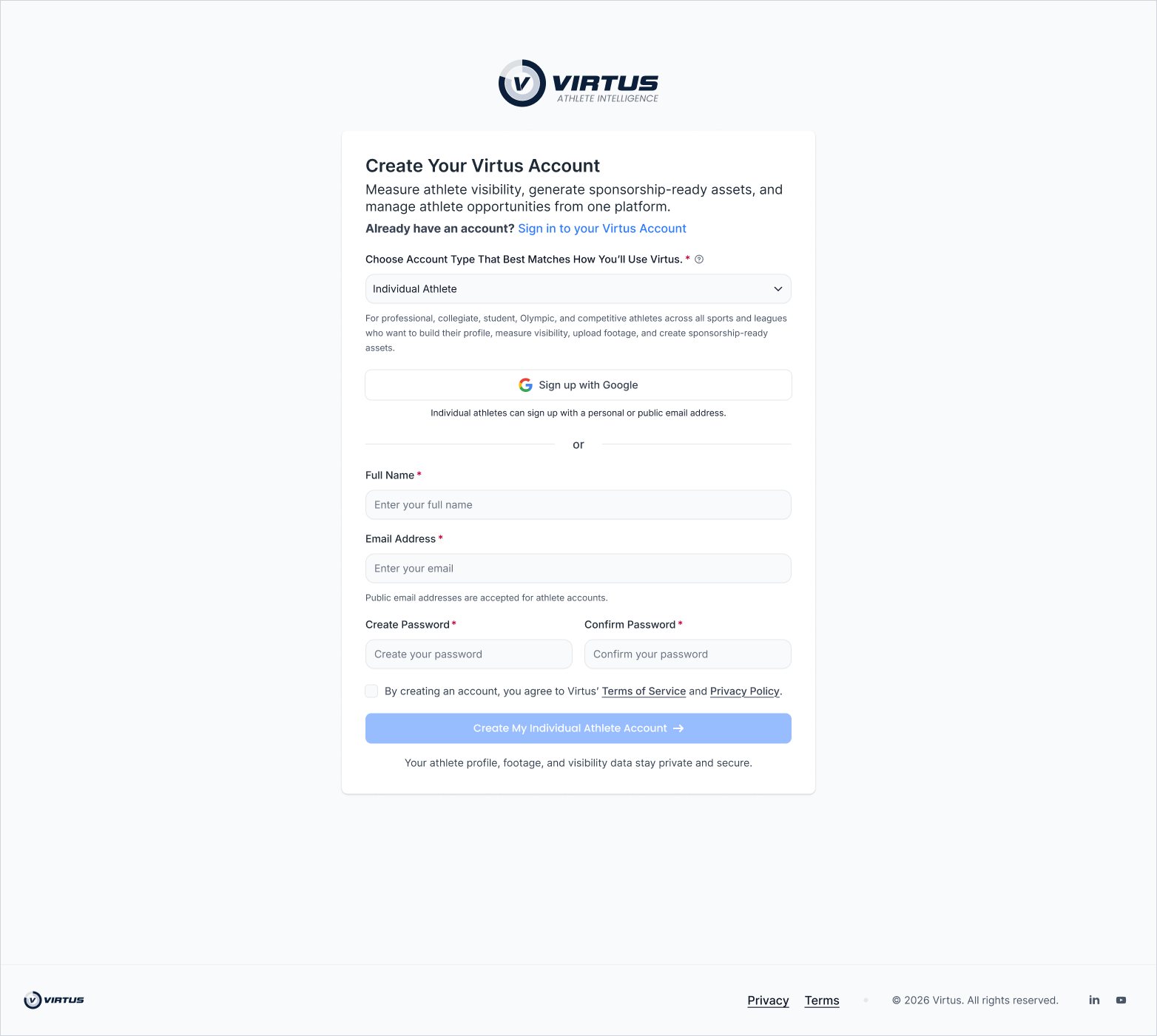
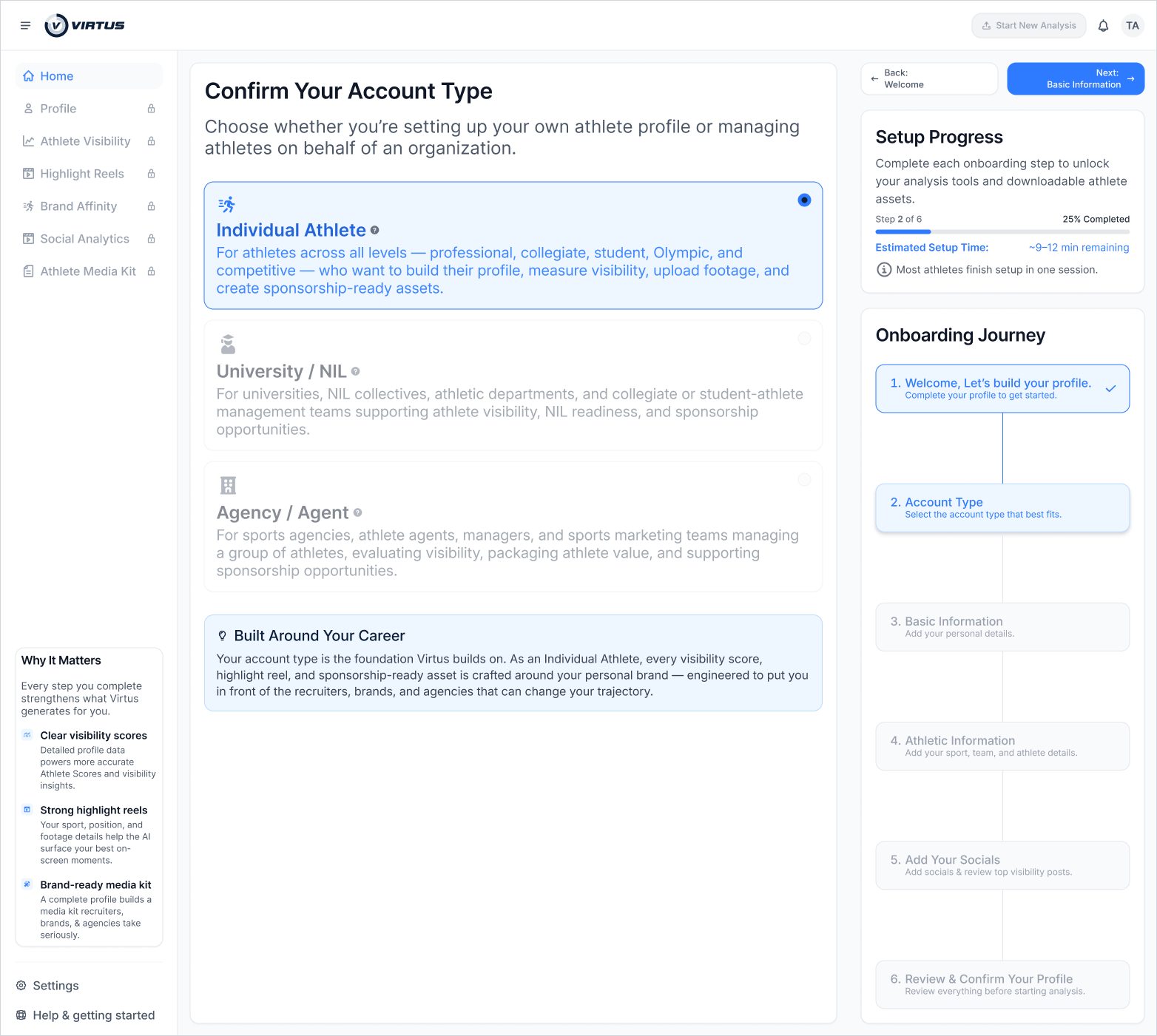
I built the design system in Figma on Flowbite and Tailwind, so the design tokens are the same in the design file and in the code. One blue, one navy and one typeface carry the whole product, which leaves the athlete's photo and numbers as the loudest things on the screen.
colour
- Brand 600
#155DFCprimary actions and the hero - Navy
#0B1F3Bheadings and dark buttons - Surface
#F9FAFBpage background - Success
#007A55and danger#B42318for status only
type
KEN ROCZEN.
More than a following.
Explore the audience and brand fit.
84.3 AUTOMOTIVE
- Inter, one family, weights 400 to 900
- Black weight and capitals for the athlete's name
- Extra-bold blue numerals for every score
buttons and tags
- Pill buttons: navy for the main action on blue, blue on white
- Tags carry status in words, never colour alone
shape and space
- Corner radius steps from 6 to 24 pixels, and full for pills
- Cards at 16, the hero at 24, so the page reads as soft and modern
- White cards on a pale grey page, with one-pixel borders
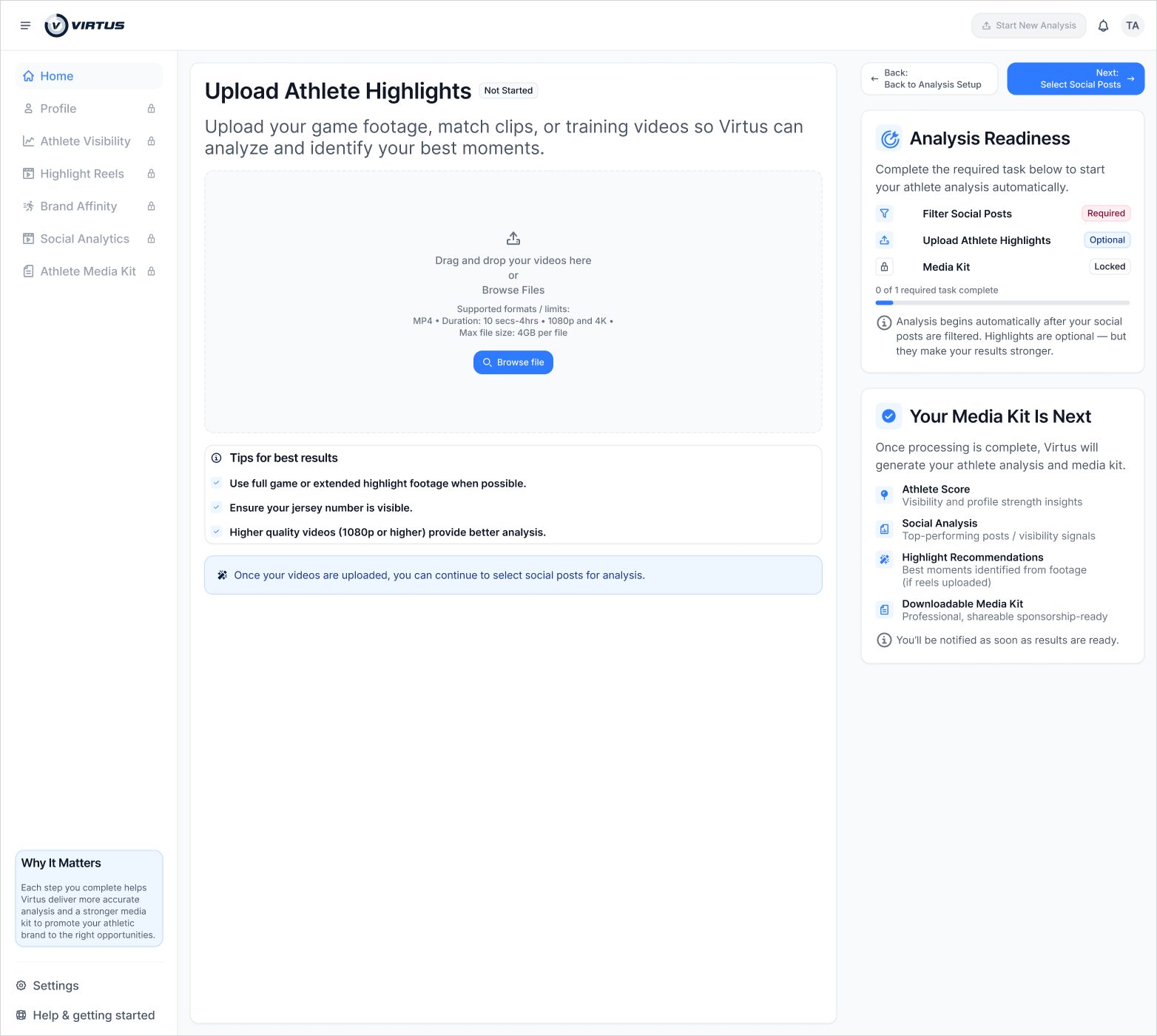
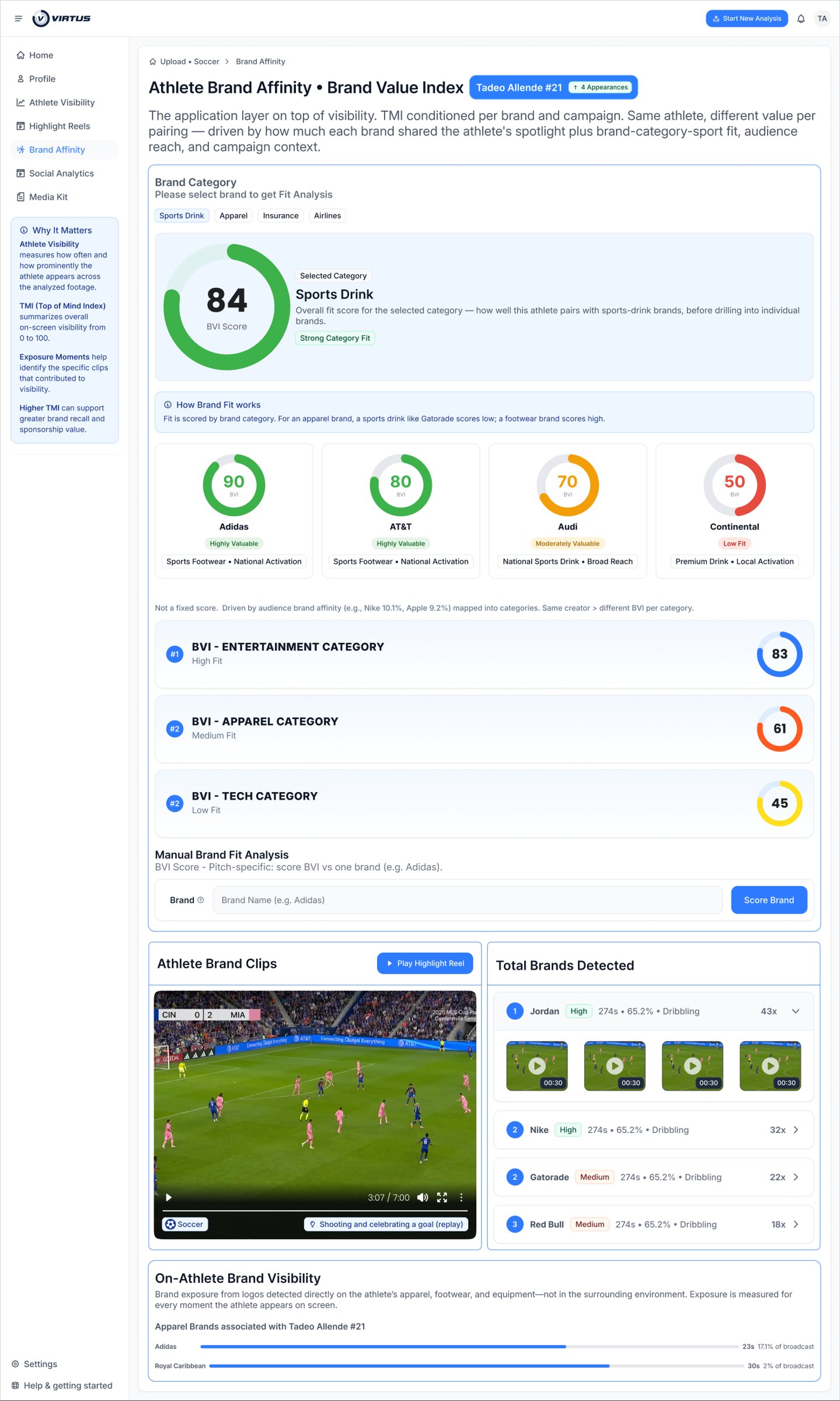
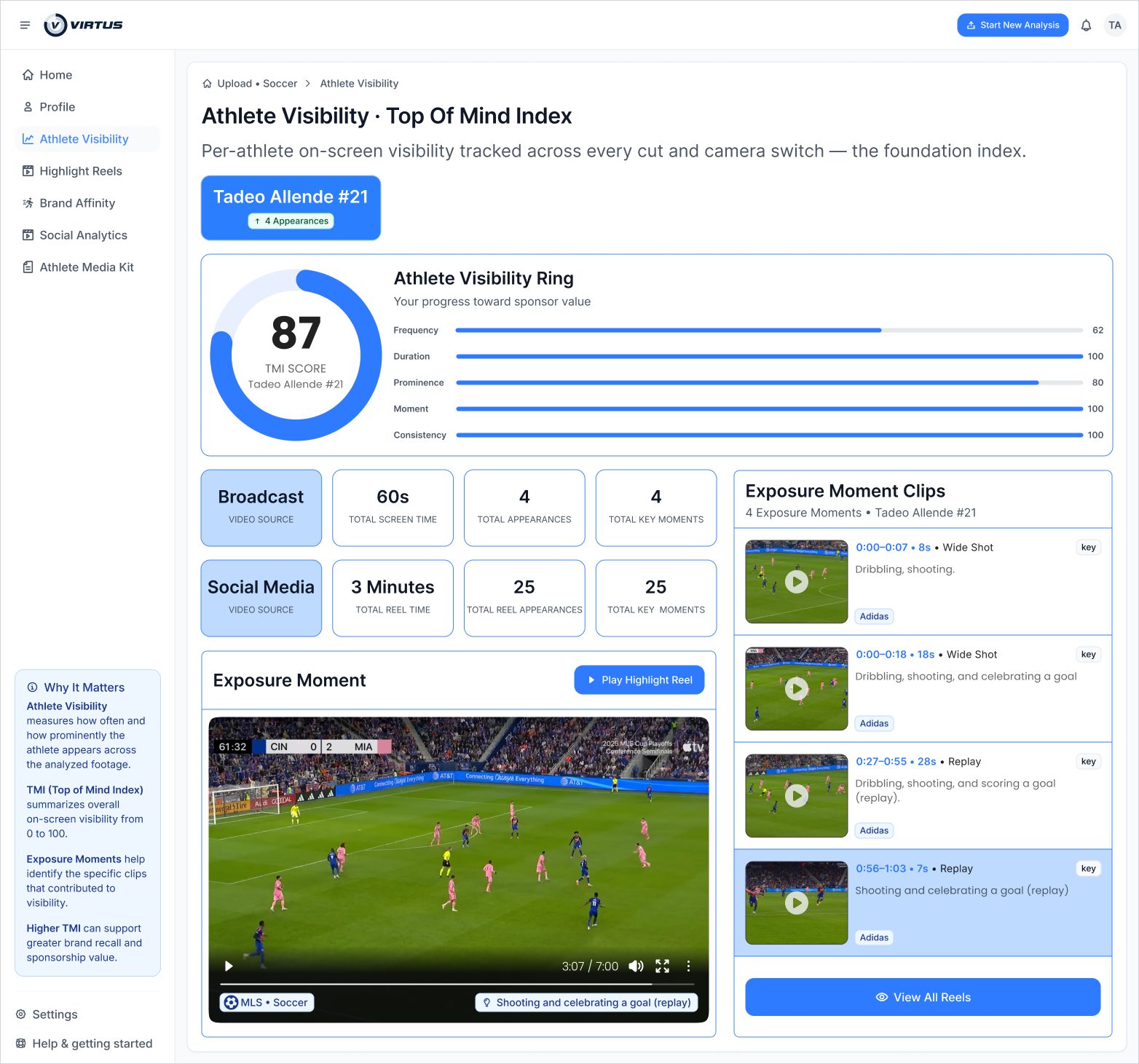
06 · shipped
How it shipped: six releases
- 01Metrics and data points for measuring an athlete's value to sponsors.
- 02Athlete experience: onboarding, add socials, upload reels, see the Media Kit.
- 03Agency dashboard: onboarding, add athletes, manage athletes, get the Media Kit.
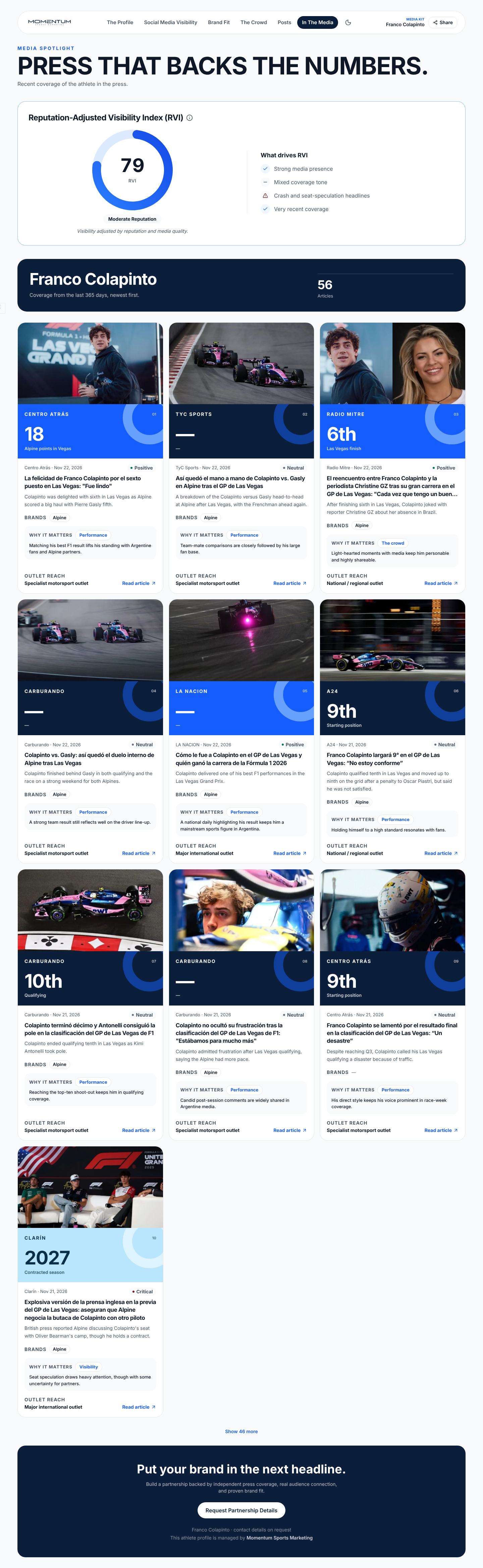
- 04Reputational Value Index with the In The Media tab, on the agency and athlete dashboards.
- 05Agency Total Sponsorship Score: a new metric for an athlete's total value to sponsors.
- 06Athlete Media Kit, complete redesign.
Also shipped across these releases: university dashboards, white-label tools and a sponsor portal.
07 · the product today
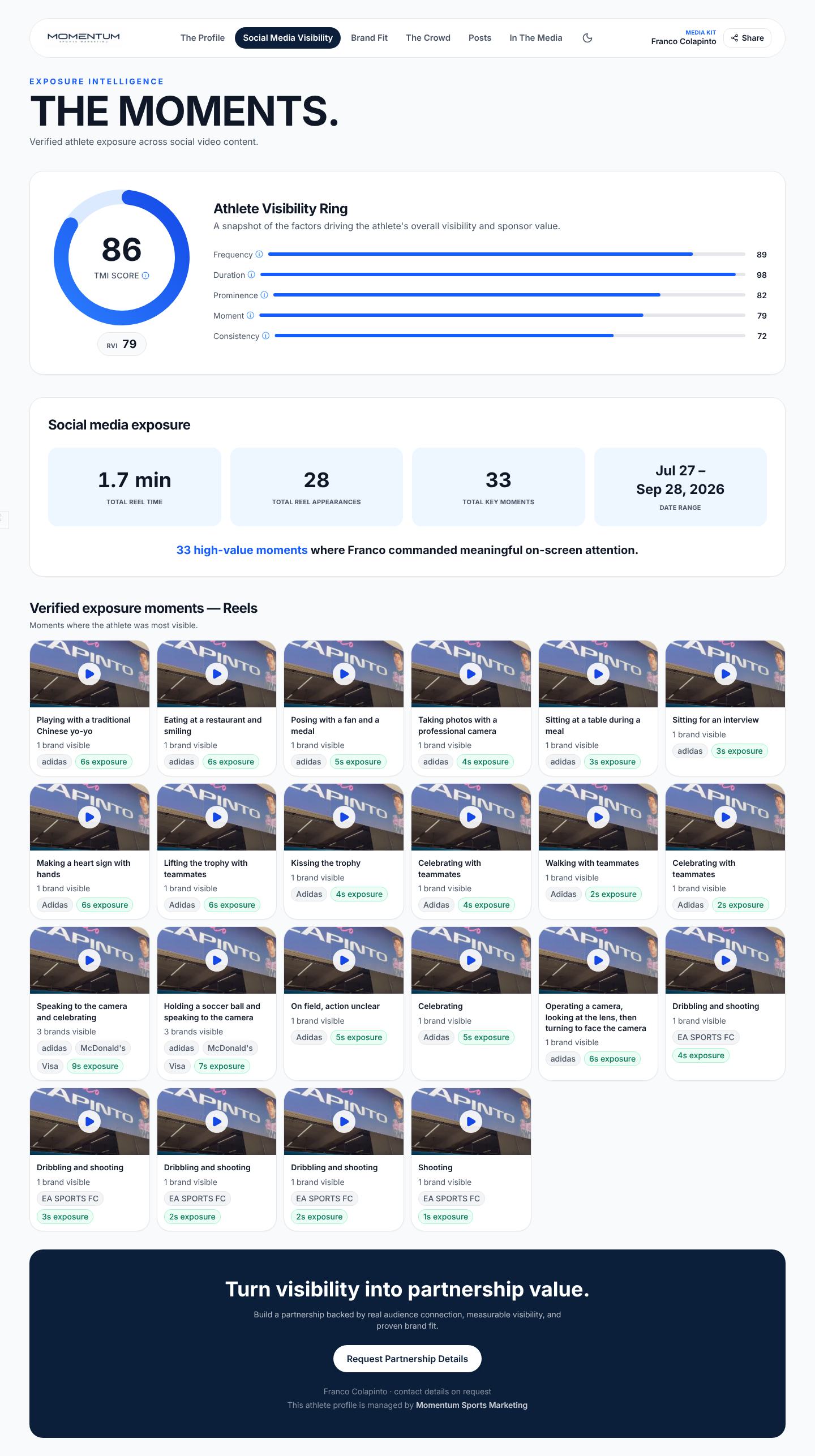
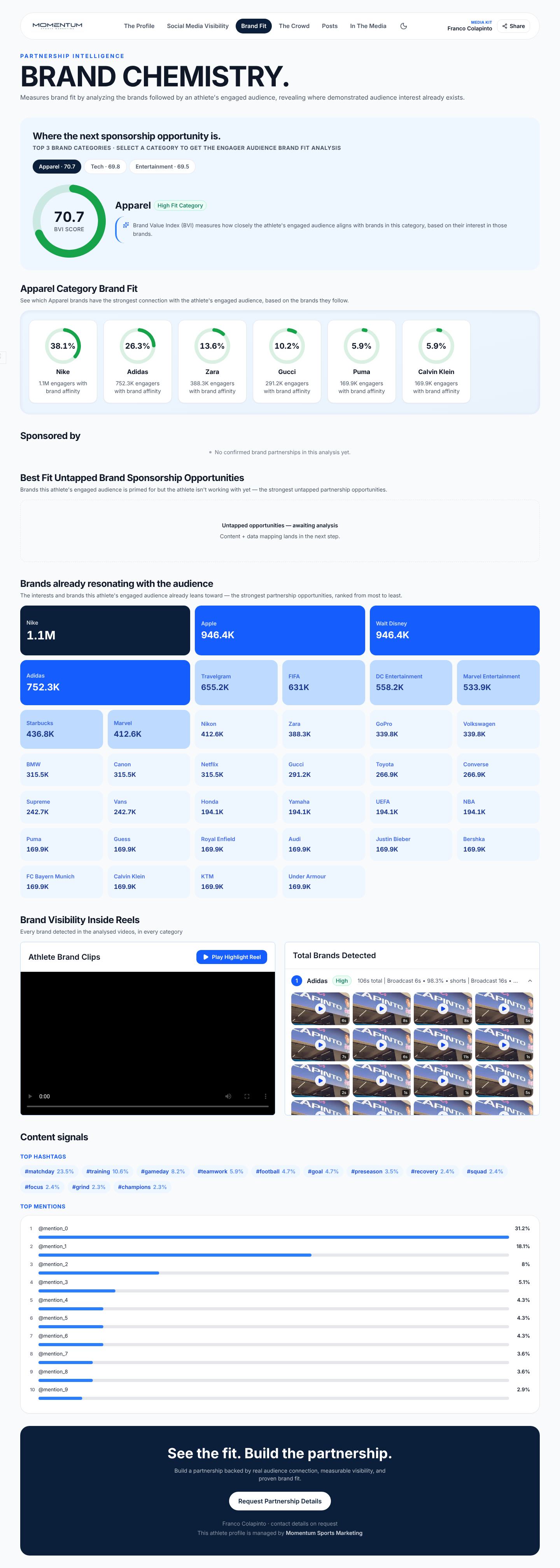
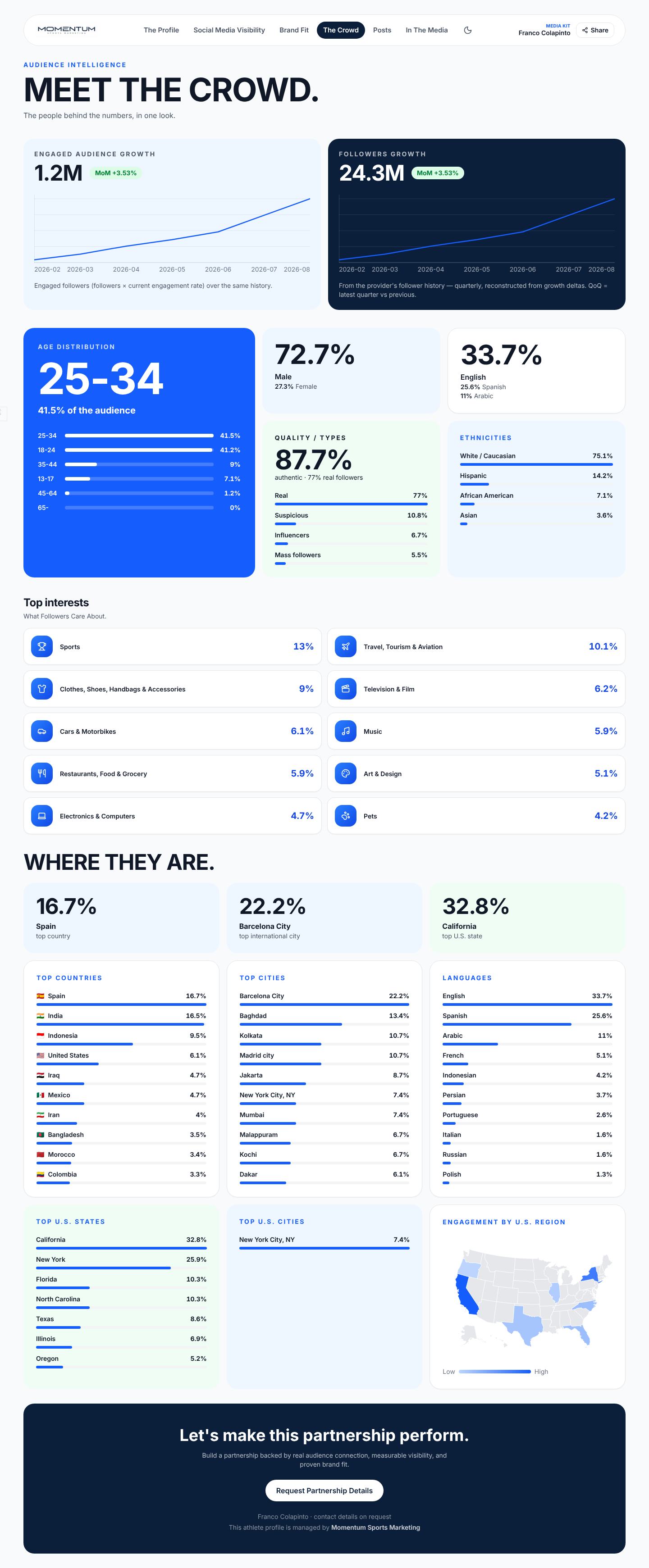
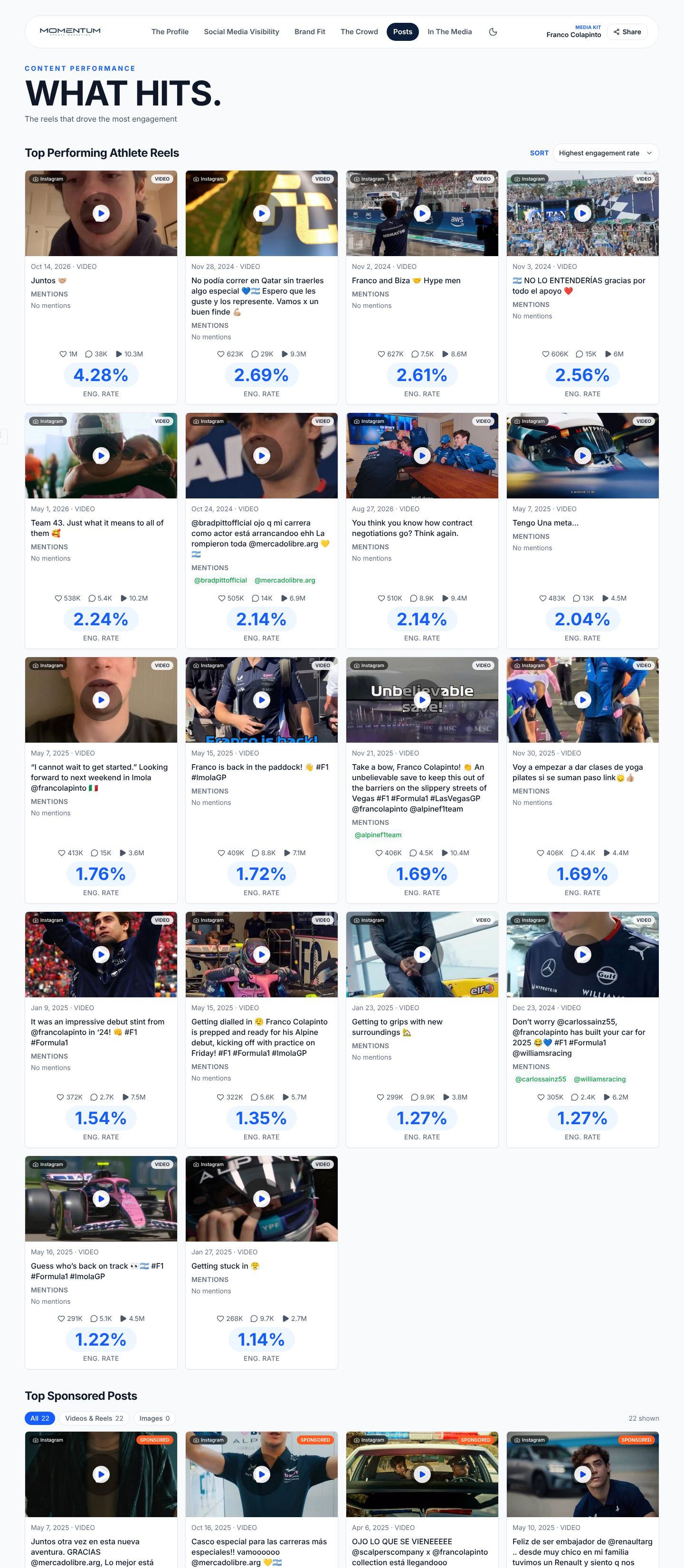
The Media Kit, as shipped
This is the real product, not a picture of it. Scroll inside the frame to read a whole tab, switch between the six tabs, or open it full screen.
The same kit, under a partner's brand
This is Franco Colapinto's Media Kit in the white-label build: the partner's logo in place of Virtus, and the same six tabs. It comes from my local build, so the position and club on the profile are placeholders. Each tab opens full length.
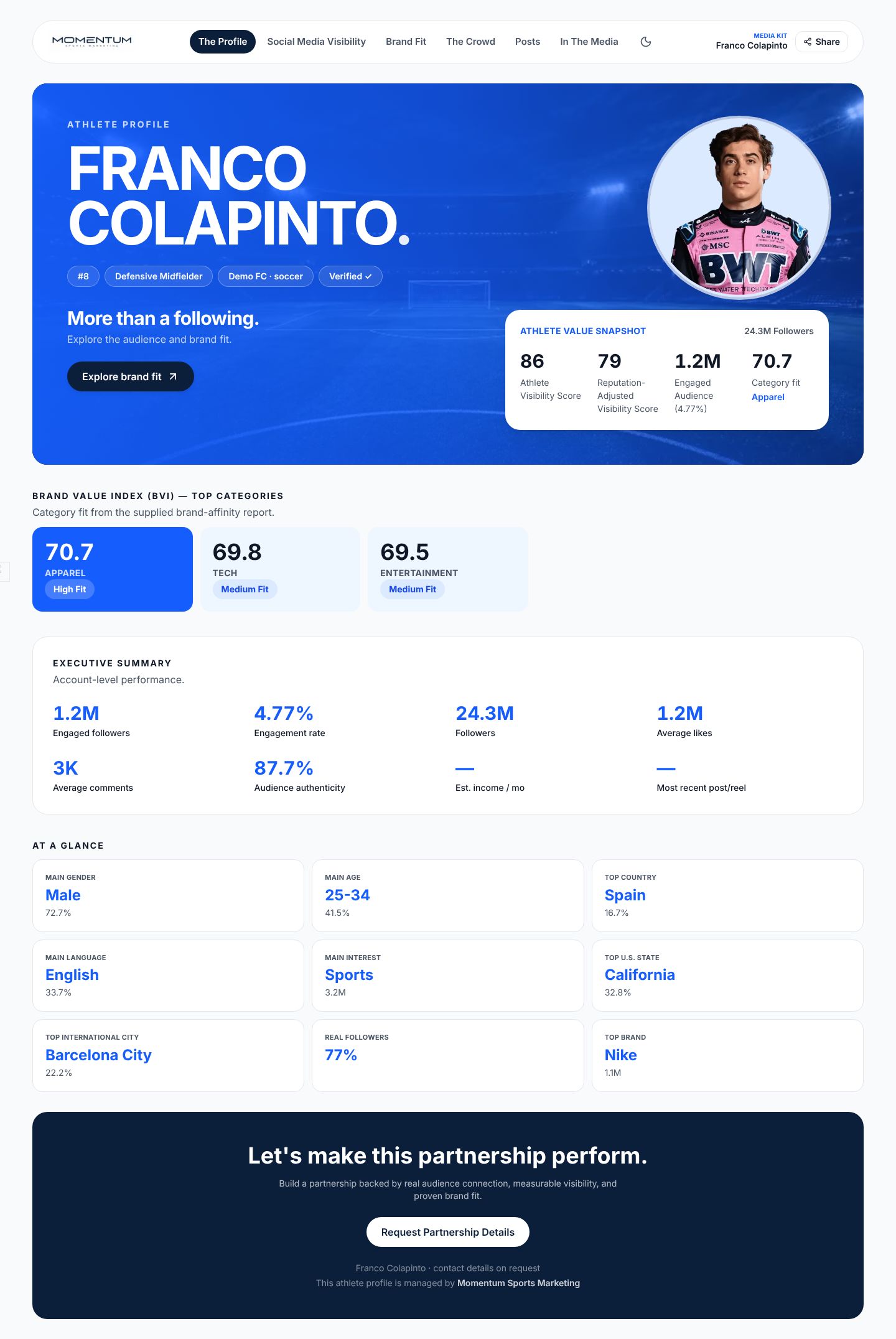
08 · outcome
Outcome
- 80%of eligible athletes used their media kits: 16 of 20, measured in Pendo
- $280K+in verified deals across sportswear, sports beverages and automotive brands
- $290Kfrom agency, reseller and white-label sign-ups
- 36signed customers: 20 athletes and 16 agencies
Six athletes used their media kits to secure those deals. The platform now serves athletes, agencies, universities and partners from one product, on web and native mobile.